Introduction
In modern concrete construction, formwork directly governs concrete finishing quality, on‑site labour efficiency and whole‑project cost.
Traditional plastic formwork suffers from low reusability and easy deformation. Conventional carbon‑steel formwork is excessively heavy and heavily relies on tower‑crane lifting. Fully‑aluminum formwork is lightweight yet requires huge upfront investment. Its closed‑system design creates compatibility barriers against other existing formwork products, which brings major challenges for general contractors and formwork rental fleets.
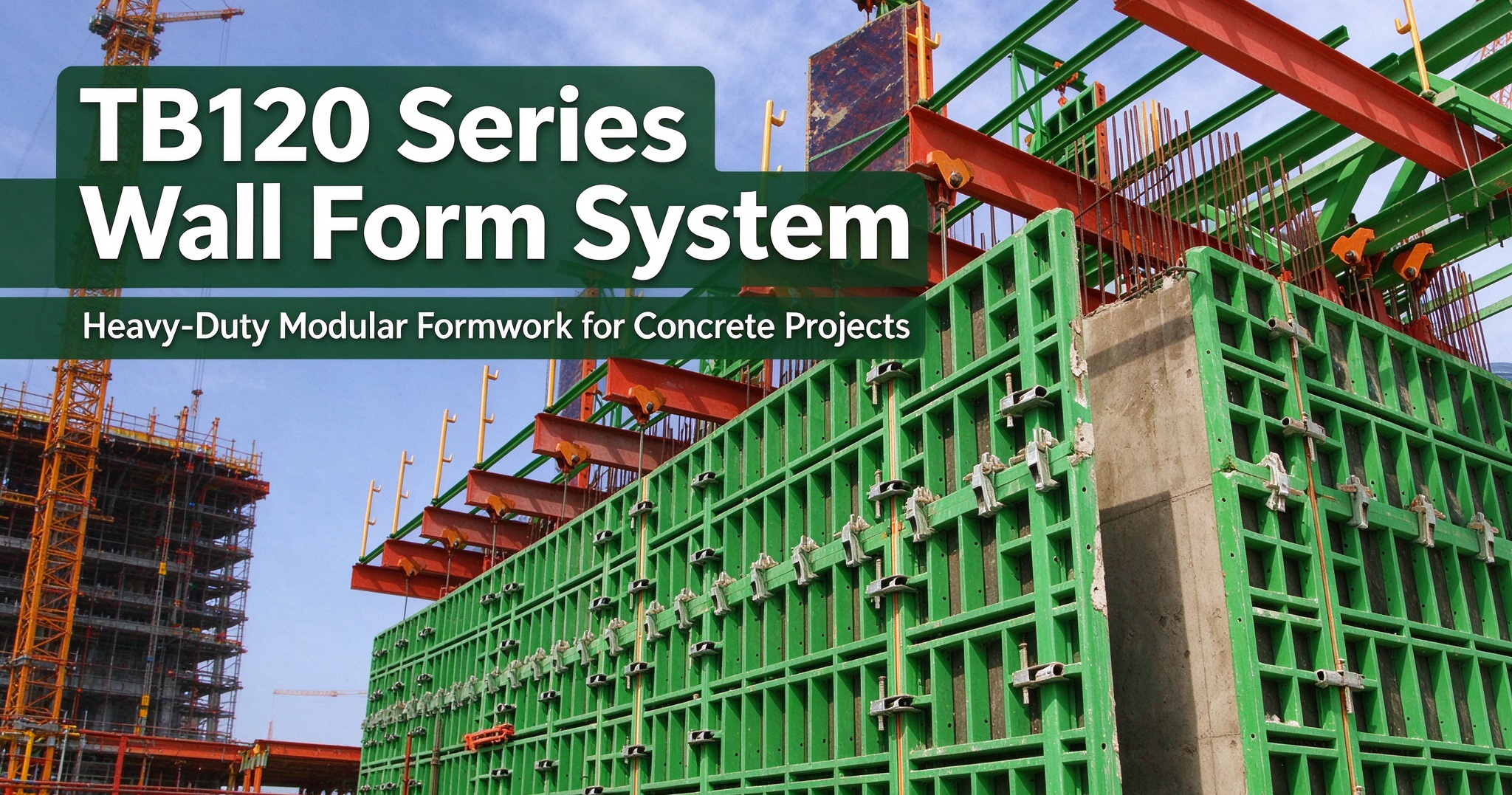
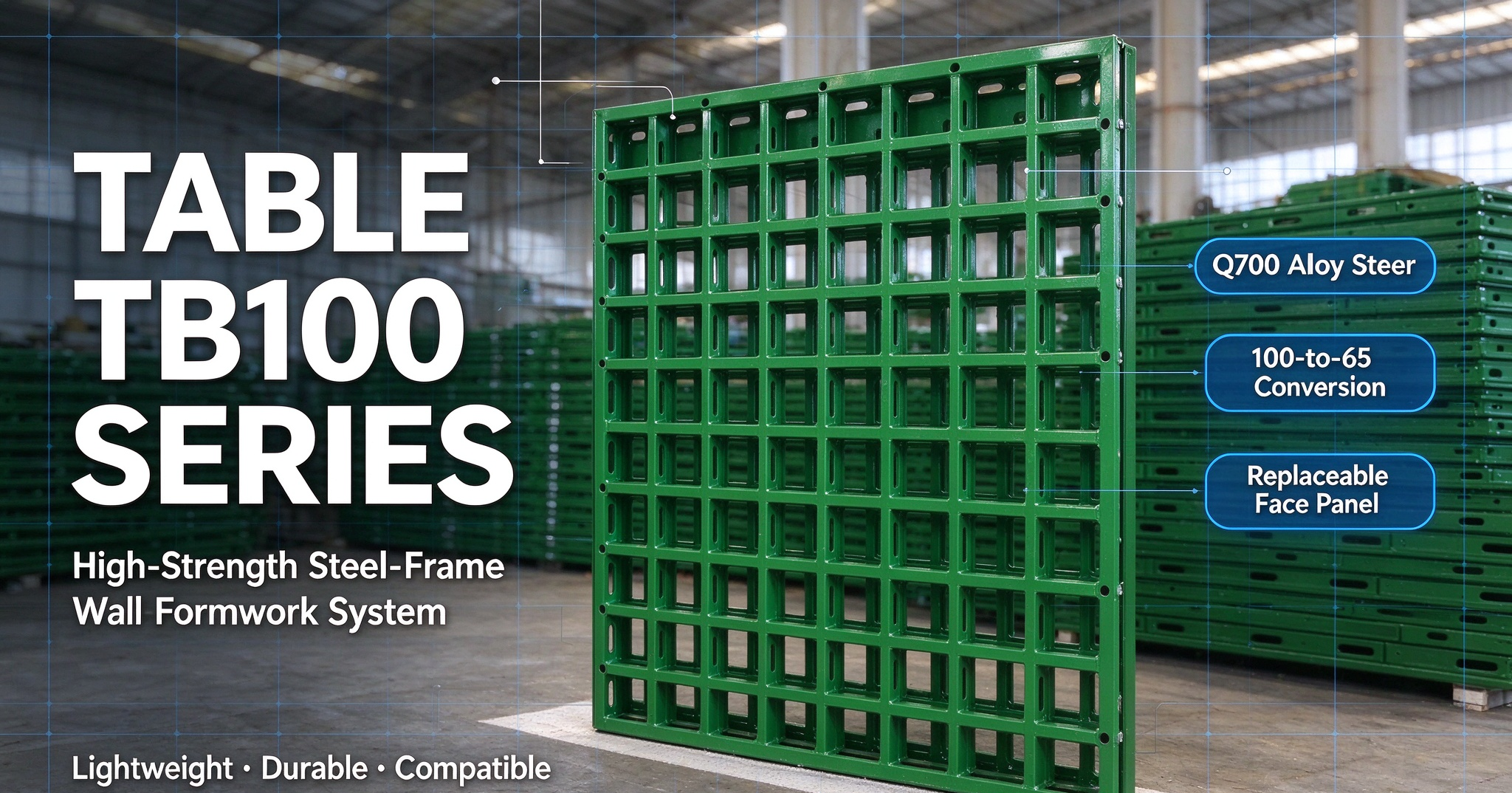
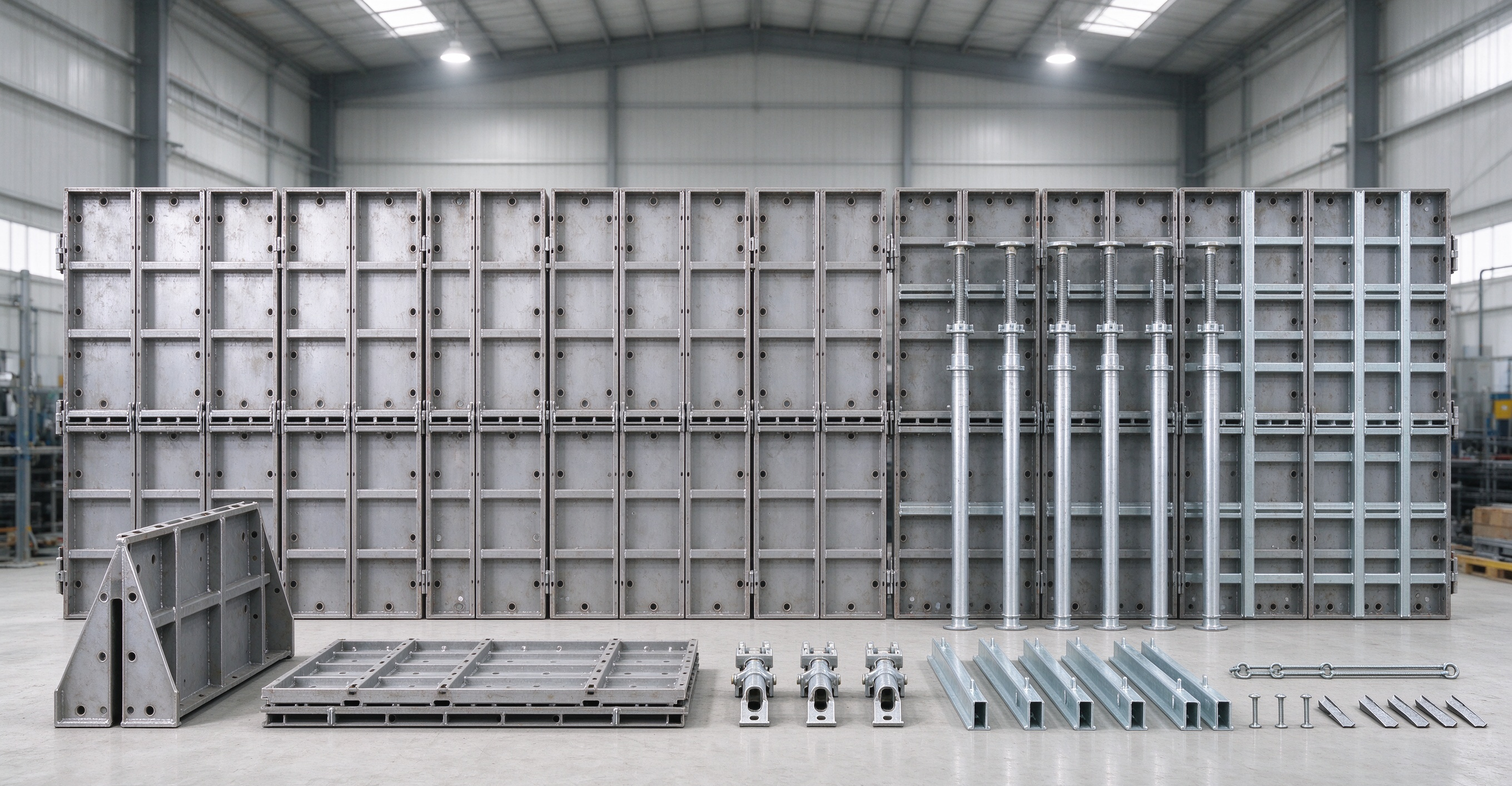
With over 20‑year expertise in formwork & scaffold R&D and manufacturing, TABLE Intelligent Construction presents the TB100 (TABLE100‑Series) Wall Formwork System. Built on Q700/Q550 high‑strength alloy steel, this solution balances light weight, long service life and cross‑system compatibility. One single system covers casting for walls, columns and slabs. Dedicated transition adapters enable straight‑run and 90‑degree corner hybrid assembly with 65‑series aluminum / steel formwork. It is also compatible with mainstream 100‑series plastic formwork available on the market, protecting clients’ existing asset investment. It serves residential buildings, basements, utility tunnels and industrial plants as a brand‑new alternative.
Core Technical Highlights of TB100‑Series
1. Q700 / Q550 High‑Strength Alloy‑Steel Frame
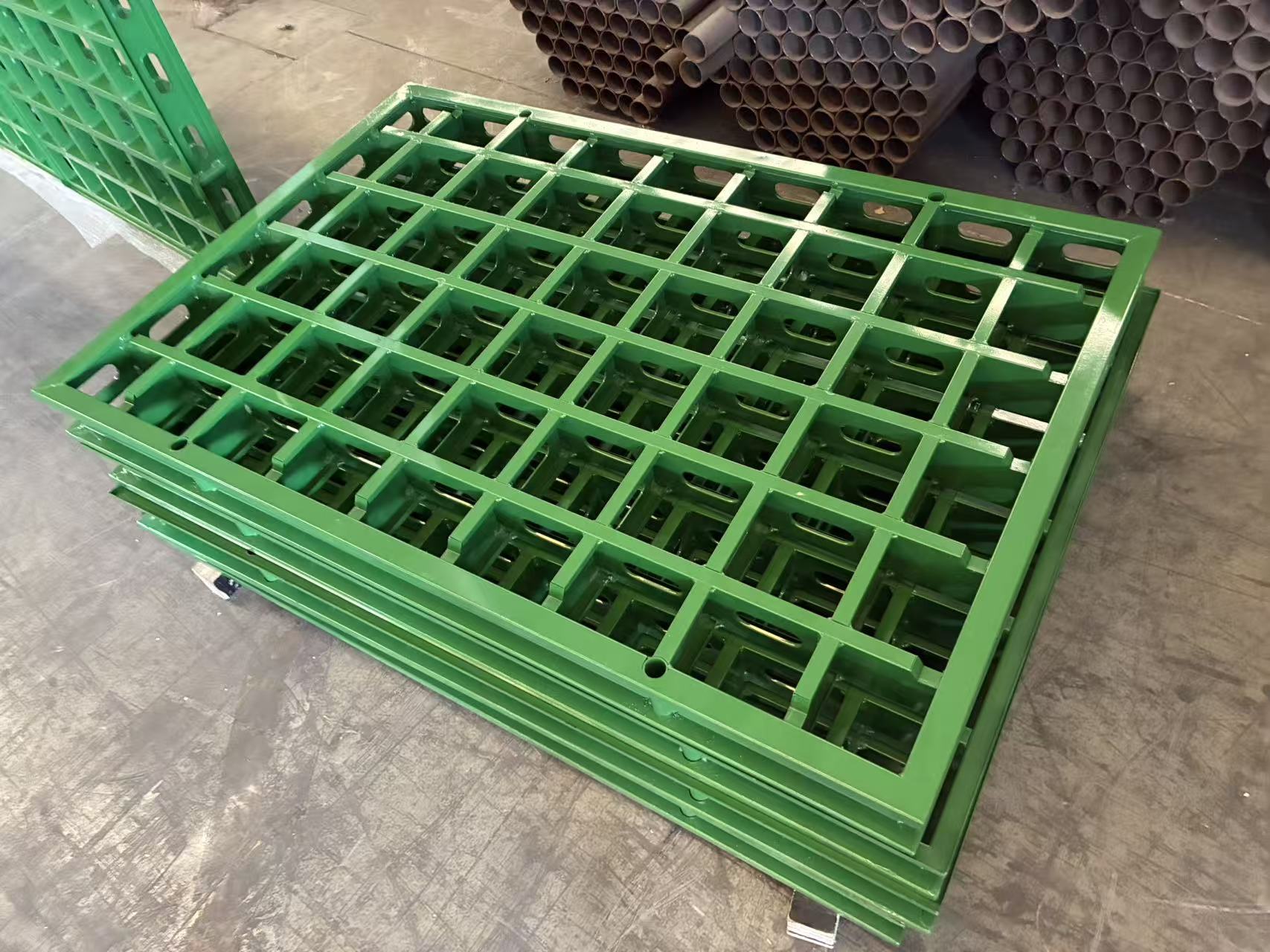
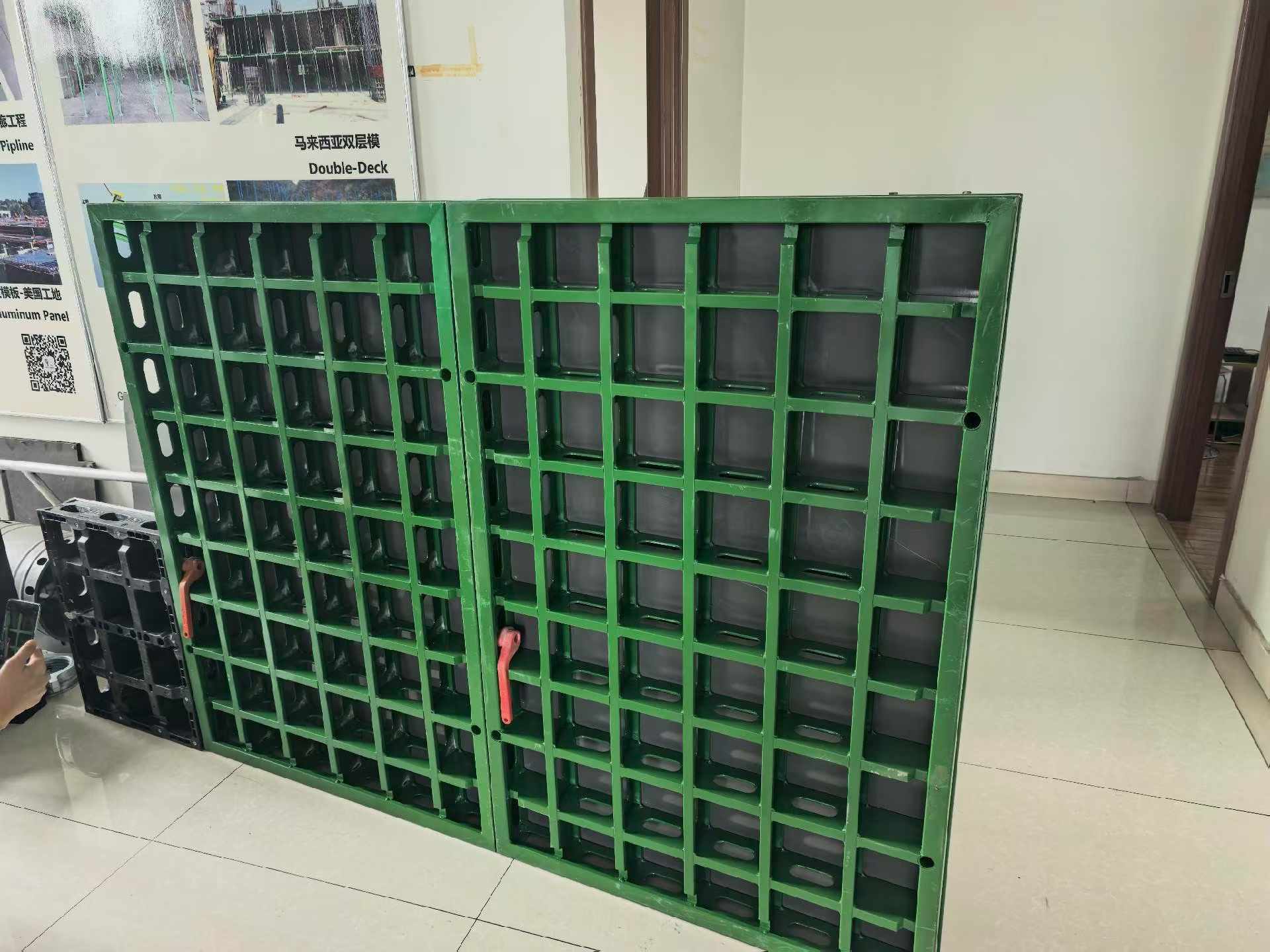
Frames adopt grade‑700 high‑strength alloy steel. Light‑weight performance is achieved under equivalent concrete lateral‑load bearing capacity, matching the weight level of aluminum and plastic formwork. The large‑size panel WP1350×900 weighs merely 34 kg, enabling manual handling by workers and less tower‑crane occupancy for faster erection. It delivers far superior impact‑resistance and anti‑deformation performance versus ordinary carbon‑steel and plastic formwork.
2. Full‑Frame Electrophoretic Anti‑Rust Treatment
The complete steel frame goes through integral electrophoretic coating. Compared with ordinary spray painting, electrophoretic finish delivers stronger film adhesion, defending against corrosion from site rainwater and cement grout. Service life is greatly extended with less on‑site maintenance required.
3. Embedded 10 mm Plywood / Composite Board
10 mm‑thick plywood or composite board is inset into the steel frame. The panel face delivers smooth concrete finishing. Welded high‑strength steel frames secure the facing board reliably for repeated cycles.
4. Built‑in Tie‑Holes & Waler Positions
Tie‑rod holes and waler mounting positions are pre‑fabricated on panels. No extra on‑site drilling is needed, cutting down fabrication time and human error.
5. Unique Transition Components for 65‑Series Formwork
Purpose‑designed transition formwork adapters support both straight‑line and 90‑degree corner conversion between TB100 and 65‑series aluminum formwork. Realize mixed assembling of two different systems to expand project adaptability.
6. Compatible with Existing Market Formwork
The TB100‑series keeps unchanged formwork dimensions and operating logic. It can be mixed‑used with well‑known 100‑series plastic formwork such as UO‑formwork. Clients’ existing panels and accessories can remain in service without full‑system replacement.
7. Upgraded Durable Steel Accessories
Connecting handles, bolts, nuts and waler bolts are upgraded to heavy‑duty steel construction for longer service cycles.
Main Panel Types & Application Scope
Wall Panels: Core modular panels for vertical wall concrete pouring, multiple dimensions from small filler panels up to large‑size 1350 mm height panels.
Transition Panels (Trans‑Panels):Special adapters connecting TB100‑100 series to 65‑series aluminum formwork for straight joints.
Trans‑IC / Internal‑Corner (IC): For inner‑corner connections.
OC (Outer‑Corner): For external 90‑degree corners of walls and columns.
The full system applies to wall, column and slab formwork in residential projects, underground structures, utility tunnels and industrial buildings.
FAQ
Q1: What material is the TB100‑series frame made of? Is it lighter than ordinary steel formwork?
A: The frame is manufactured from Q700 / Q550 high‑strength alloy steel. Under the same concrete pressure load requirement, TB100 panels achieve weight comparable to aluminum and plastic formwork. Large panels can be manually carried by site workers, reducing tower‑crane dependency.
Q2: Can TB100 mix‑match with my existing 100‑type plastic formwork?
A: Yes. TB100 follows the same dimensional specification and connection logic as mainstream 100‑series plastic formwork. Your existing panels and accessories can keep working together with TB100 new panels without discarding old stock.
Q3: Can TB100 connect to 65‑series aluminum formwork?
A: Yes. Dedicated transition components (Trans‑Panels, Trans‑IC) support both straight‑section and 90‑degree corner conversion between TB100‑100 and 65‑series aluminum / steel formwork, enabling hybrid steel‑aluminum formwork solutions for complex projects.
Q4: How about anti‑rust performance on construction sites?
A: All frames adopt integral electrophoretic painting rather than simple spray coating. Electrophoretic coating provides uniform, high‑adhesion anti‑corrosion protection against cement slurry and humid site environment, greatly improving re‑use cycles.
Q5: What applications fit the TB100‑series best?
A: It works for cast‑in‑situ concrete walls, columns and slabs. Typical projects include residential buildings, basements, comprehensive utility tunnels, commercial complexes and industrial workshops. It fits both new‑build and renovation scenarios.
Q6: What is the advantage comparing to pure aluminum formwork?
A: TB100 avoids the high upfront investment of full‑aluminum systems. It is open‑architecture and compatible with legacy formwork inventory. Alloy‑steel material brings good impact‑resistance on rough construction sites. Meanwhile it retains lightweight manual‑erect features.
Q7: Does the system supply complete accessories?
A: Yes. The scope covers wall panels, transition panels, inner‑corner IC, outer‑corner OC, steel connecting handles, tie‑bolts, nuts and waler bolts. All matching steel accessories are optimized for enhanced durability.
Conclusion
TABLE TB100‑series wall formwork re‑thinks traditional formwork design by applying high‑grade alloy‑steel material. It merges lightweight handling, long‑cycle durability and multi‑system compatibility. For contractors and rental companies, it lowers capital pressure by re‑utilizing existing formwork assets while securing concrete forming quality and site construction efficiency.
If you are seeking flexible, high‑performance modular formwork solutions for your upcoming projects, TB100‑series is worth your evaluation.
Published by TABLE Intelligent Construction Technology (Suzhou) Co., Ltd.
Website: [www.tableformwork.com](https://www.tableformwork.com) | [www.tableshoring.com](https://www.tableshoring.com)
Email: tableshoring@gmail.com; tableformwork@gmail.com