Q700 High‑Strength Alloy Steel TABLE 100‑Series Wall Formwork System
Next‑Generation Light‑Weight Modular Steel‑Framed Formwork Solution
In modern construction, formwork design must reconcile low self‑weight, high load‑bearing capacity, cross‑system compatibility and long‑term service life — key performance metrics for main contractors and formwork rental enterprises. Traditional plastic formwork suffers from low turnover capacity and structural deflection; aluminium formwork demands substantial upfront capital investment with limited interoperability with alternative formwork systems.
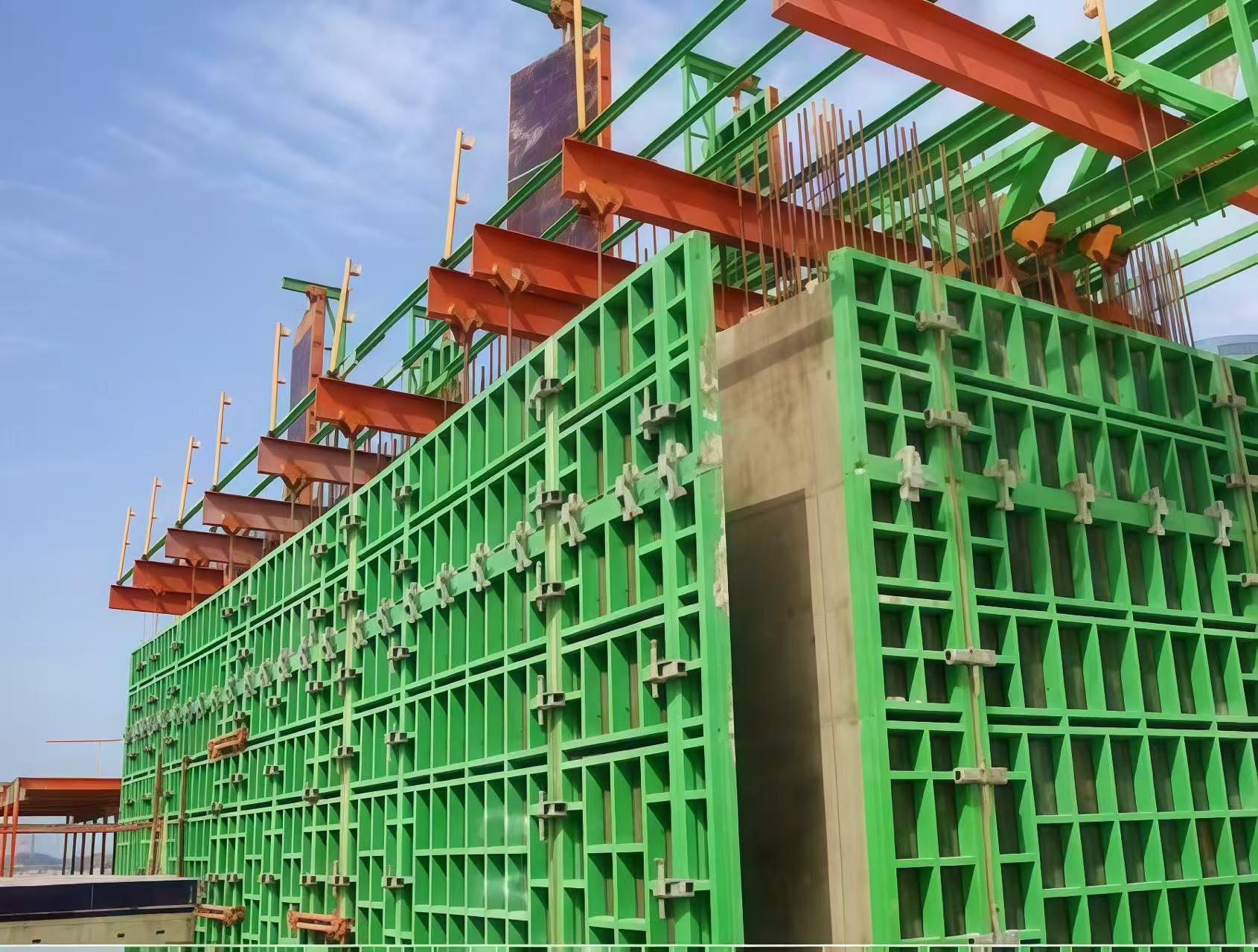
Developed with Q700 high‑strength alloy steel, the TABLE 100‑Series wall formwork system delivers advanced steel‑framed forming technology. Engineered for walls, columns and cast‑in‑situ slabs, this system employs purpose‑built transition adapters to mechanically interface with 65‑series aluminium or steel formwork, providing a high‑performance technical solution for concrete construction projects.
Overview of the TABLE 100‑Series Wall Formwork System
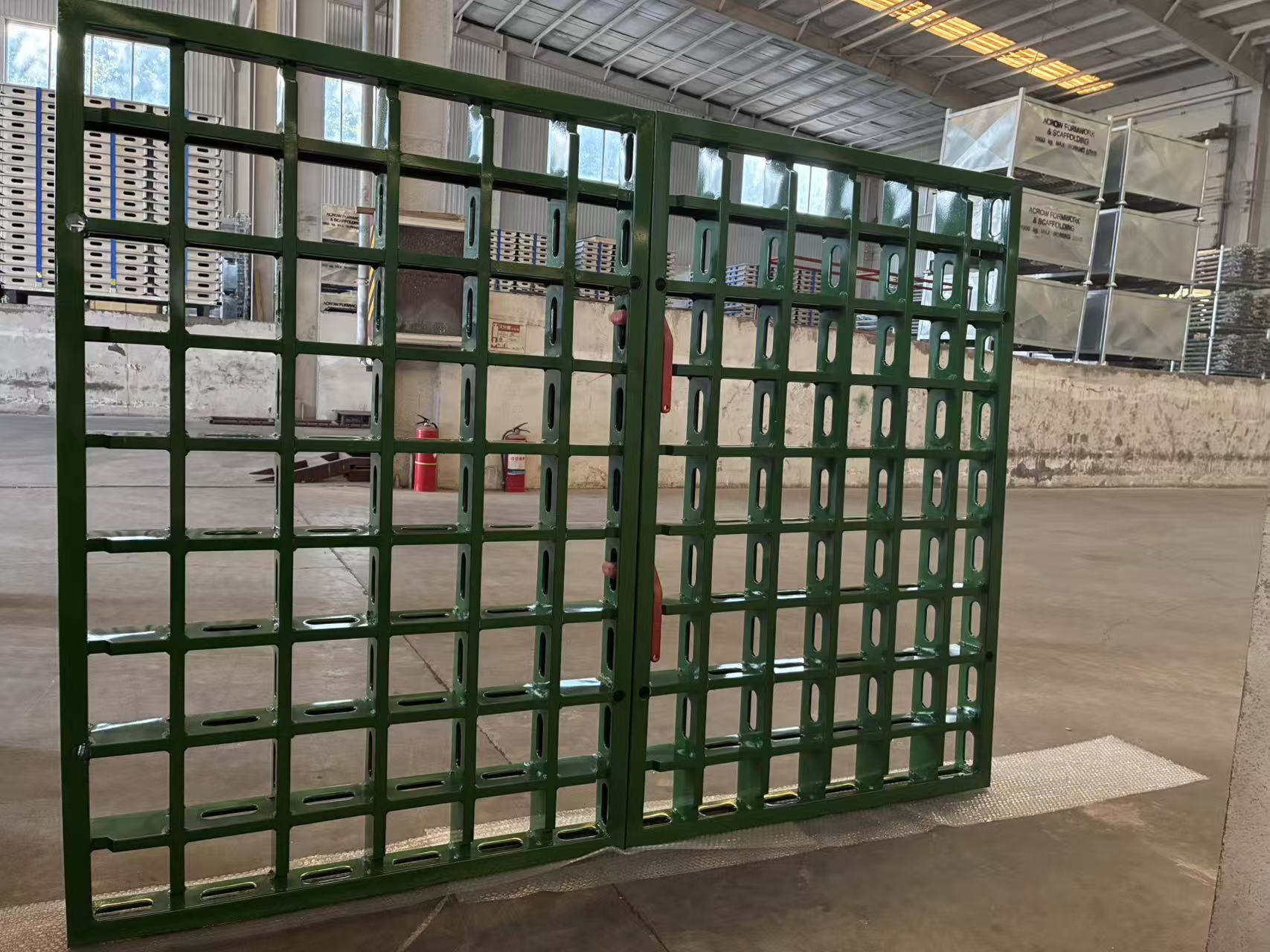
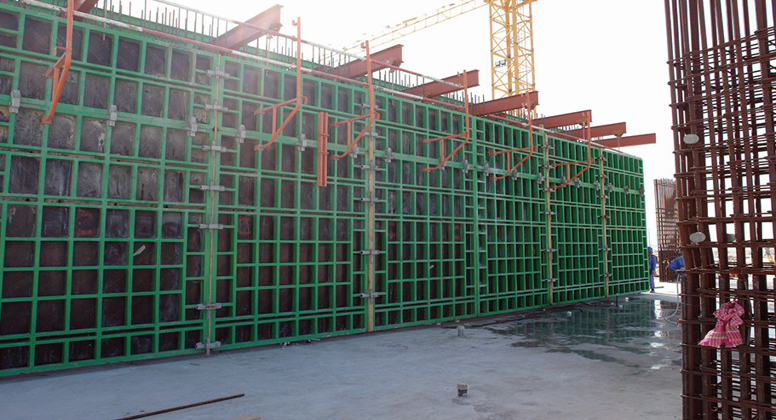
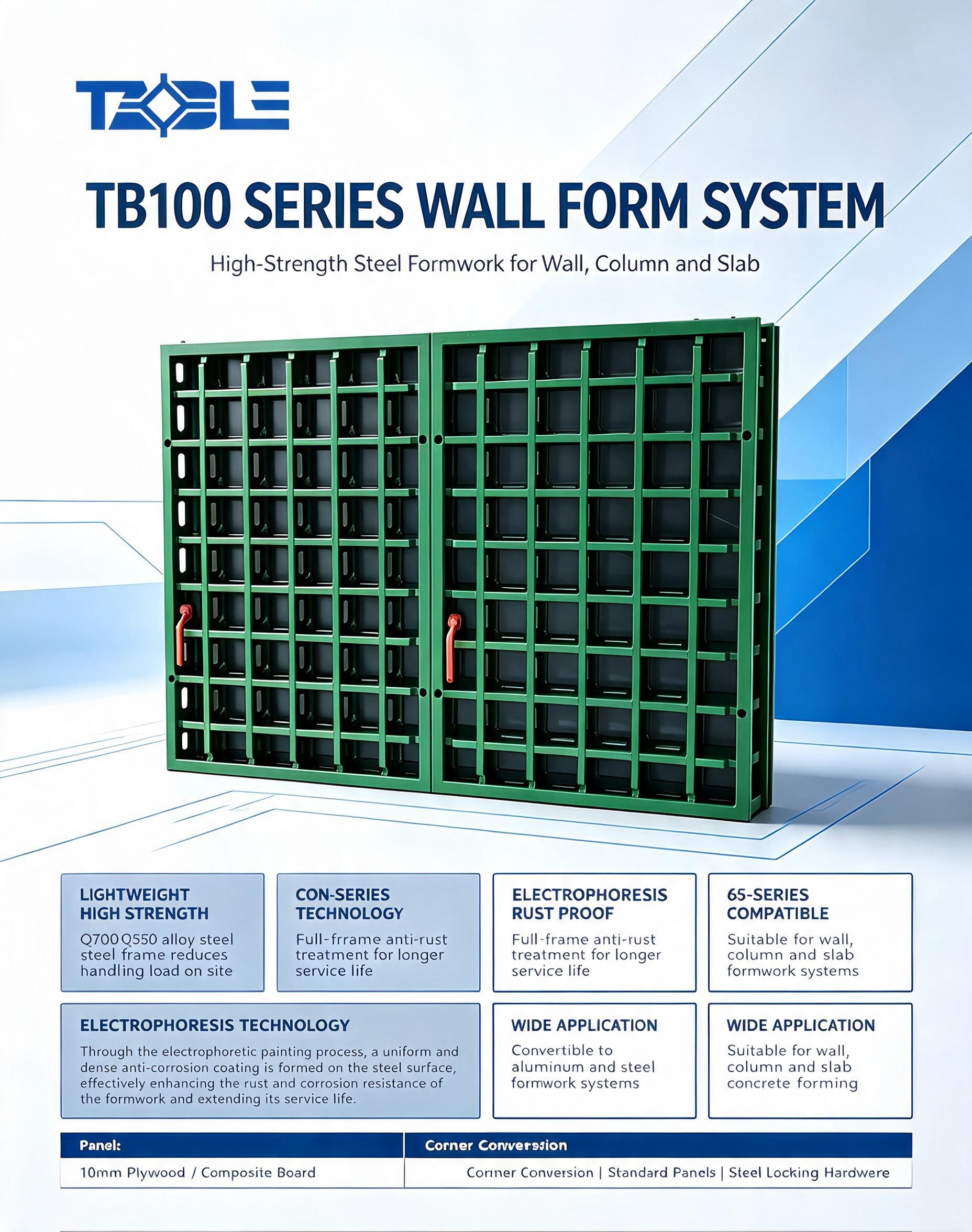
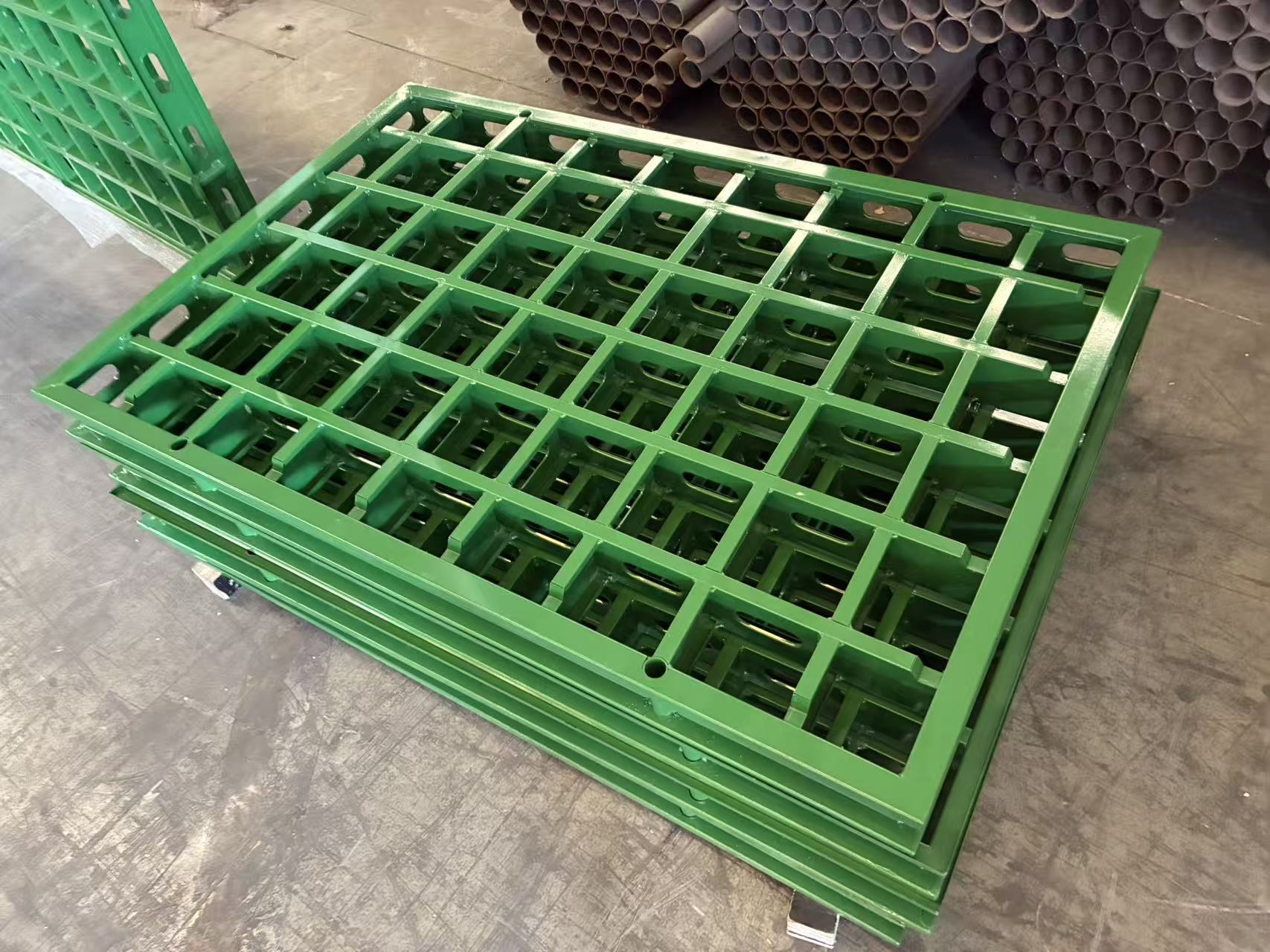
The TABLE 100‑Series wall panel system is an innovative steel‑framed formwork product, manufactured by an enterprise with over 20 years of R&D and practical experience in the formwork & scaffolding sector. Panel frames are welded from Q700 / Q550 high‑strength alloy steel and receive full‑frame electrophoretic anti‑corrosion surface treatment. A 10 mm‑thick plywood or composite facing panel is embedded within the steel frame assembly.
Beyond vertical wall forming, the system is fully applicable to column and slab construction. Factory‑pre‑cut tie‑rod apertures and integrated waler seating positions are incorporated into each panel. Dedicated transition components support both in‑line and 90‑degree angular conversion, enabling hybrid erection with 65‑series aluminium or steel formwork.
Its modular dimensional scheme aligns with globally prevalent 100‑series plastic formwork standards. Existing legacy panels and accessories can be retained and reused, effectively lowering capital expenditure for system upgrades.
Core Technical Advantages of TABLE 100‑Series Formwork
1. Optimised Light‑Weight Performance via High‑Strength Alloy Steel
Constructed from Q700 high‑strength alloy steel, panels achieve weight metrics comparable to aluminium and plastic formwork under equivalent design load requirements.
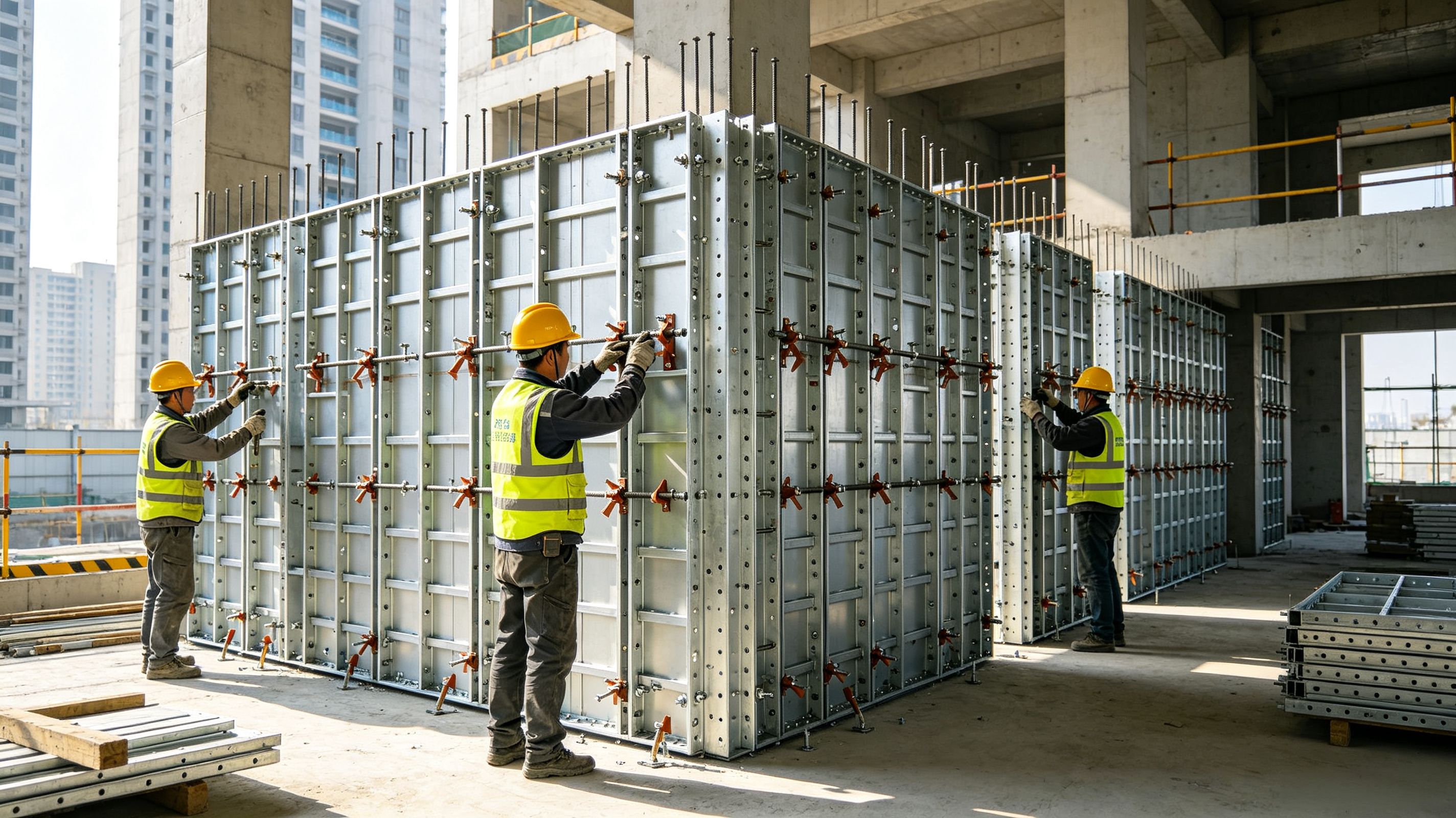
The large‑format WP1350×900 panel weighs only 34 kg, enabling manual handling on‑site. This reduces tower‑crane occupancy, accelerates form erection cycles and mitigates safety risks associated with overhead lifting operations.
Representative Technical Specifications
- WP1350×900: 1.35 m × 0.90 m, Area 1.215 m², Unit Weight 34 kg
- WP600×900: 0.60 m × 0.90 m, Area 0.540 m², Unit Weight 17 kg
- WP150×900: 0.15 m × 0.90 m, Area 0.135 m², Unit Weight 6.3 kg
2. Full‑Frame Electrophoretic Coating for Superior Corrosion Resistance
The entire steel frame is finished with electrophoretic deposition coating, which outperforms conventional spray‑paint finishes in impact resistance and environmental durability against humid construction‑site conditions. It minimises corrosion‑induced component failure and makes the system highly suitable for high‑turnover rental fleets.
Auxiliary hardware is upgraded to heavy‑duty steel components, including steel connection levers, bolt‑nut assemblies and straight waler bolts. Reduced component wear lowers recurring replacement costs over the full asset lifecycle.
3. Cross‑System Interoperability: Transition Compatibility with 65‑Series Formwork
Purpose‑engineered Trans‑Panels and corner transition adapters (IC‑internal corner, OC‑external corner) support in‑line linear jointing and 90‑degree angular conversion. TABLE 100‑series panels can connect flushly with 65‑series aluminium or steel formwork.
Full replacement of existing formwork stock is not required. Pre‑owned 65‑series aluminium formwork can be assembled in combination with 100‑series high‑strength steel panels to resolve complex geometric joints for residential and commercial building projects.
4. High Modular Versatility and Legacy‑Hardware Compatibility
System modular dimensions are functionally equivalent to mainstream 100‑series plastic formwork (e.g. UO‑type formwork). Legacy panels and fastening hardware permit mixed‑system erection without mandatory stock obsolescence. One integrated formwork system fulfils forming demands for walls, columns and slabs, eliminating investment in multiple discrete formwork suites.
5. Complete Modular Component Portfolio for Complex Geometric Conditions
The full component range includes standard wall panels, Trans‑Panels transition panels, IC internal corner units, OC external corner units, steel locking connectors and waler bolts.
A comprehensive size matrix ranging from 150 mm to 1350 mm accommodates openings, perimeter edges and variable cross‑sections. It minimises ad‑hoc on‑site timber cutting and delivers improved concrete surface finishing quality.
Target Application Scenarios
✅ High‑rise residential shear‑wall & column structural works
✅ Frame‑shear‑wall public and commercial building projects
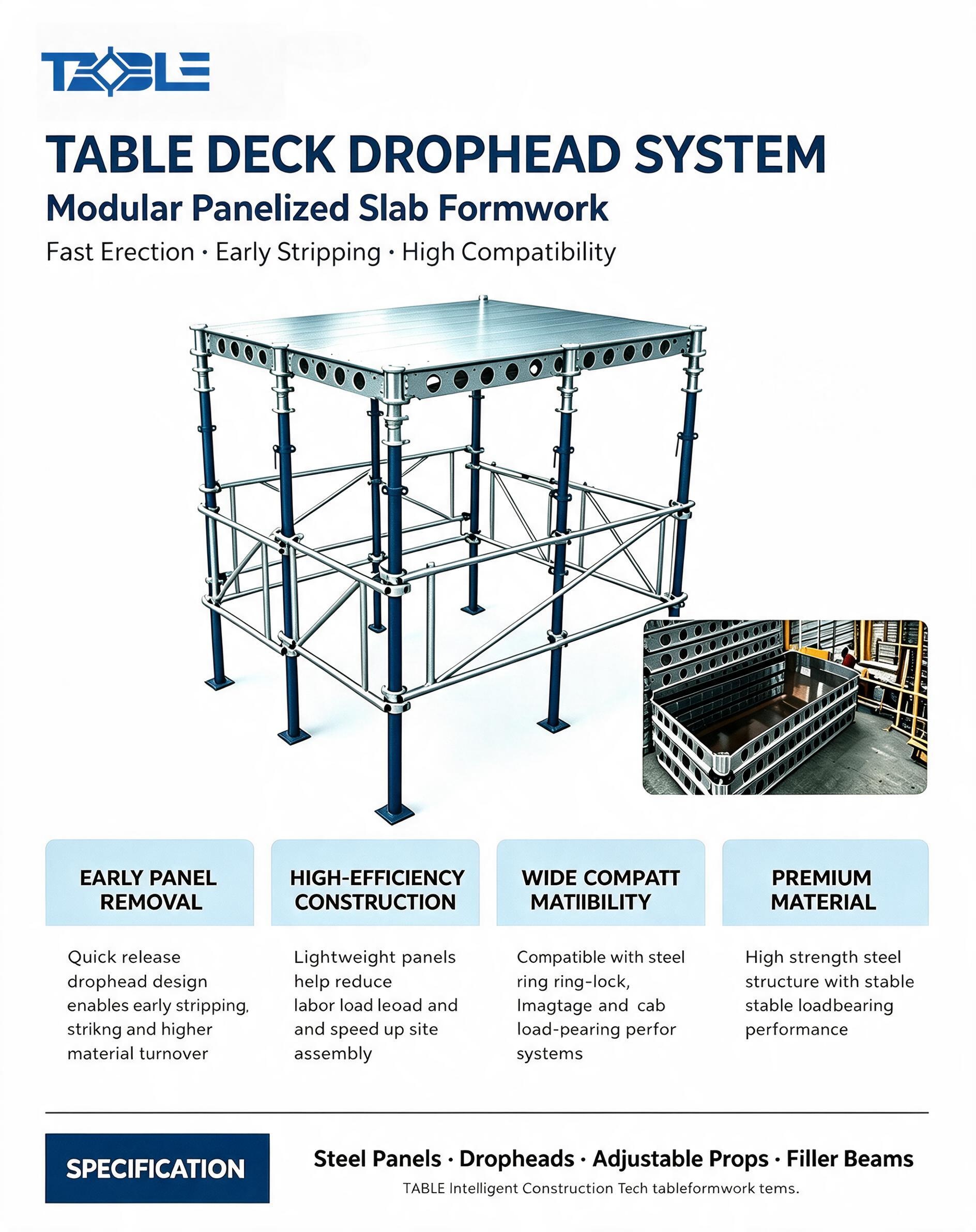
✅ Cast‑in‑situ suspended slab construction
✅ Retrofit projects requiring integration of new and legacy formwork inventories
✅ Formwork rental operators seeking high‑turnover, long‑service‑life assets
✅ Complex projects requiring hybrid assembly of steel formwork and 65‑series aluminium formwork
Frequently Asked Questions
Q1: What are the core distinctions between TABLE 100‑series formwork, conventional plastic formwork and aluminium formwork?
A:
Conventional plastic formwork has limited turnover capacity and is prone to permanent deformation and material ageing. Aluminium formwork features low unit weight yet carries high upfront procurement costs; its closed‑system architecture restricts interoperability with legacy formwork.
The 100‑series high‑strength steel formwork offers distinct technical strengths:
1. Q700 high‑strength alloy steel achieves weight performance comparable to aluminium formwork; welded steel frames provide substantially higher impact resistance and turnover cycles versus plastic alternatives.
2. Mechanical compatibility with commercially‑available 100‑series plastic formwork.
3. Physical interfacing with 65‑series aluminium formwork via dedicated transition hardware to break cross‑system technical barriers.
4. Electrophoretic anti‑corrosion treatment optimised for cyclic repeated use within rental fleets.
Q2: Can existing formwork accessories be deployed alongside 100‑series panels?
A: Yes. Modular dimensions and tie‑rod hole patterns comply with prevailing 100‑series wall formwork industry standards (e.g. UO‑specification plastic formwork). Most existing clamps, walers and fastening hardware remain functional, avoiding full accessory replacement and cutting overall system‑upgrade capital expenditure.
Q3: How is the mechanical transition realised between 100‑series panels and 65‑series aluminium formwork?
A: Purpose‑designed Trans‑Panels and Trans‑IC corner adapters are utilised. Two conversion modes are available: in‑line straight‑wall transition and 90‑degree corner transition. These components enable assembly between formwork systems of different module widths without destructive field cutting or on‑site modification.
Q4: What material is used for facing panels, and is facing replacement possible?
A: The embedded facing is 10 mm‑thick plywood or composite board. Facing boards are consumable wear‑parts. Once abraded or damaged, only the facing panel needs replacement while the structurally‑sound steel frame can be reused, lowering amortised formwork costs per project.
Q5: Is the TABLE 100‑series system suitable for formwork‑rental‑company asset fleets?
A:Highly recommended. Electrophoresis‑treated steel frames and heavy‑duty steel hardware deliver far longer turnover service life than plastic formwork. Capable of wall, column and slab forming as well as interfacing with aluminium formwork, the system satisfies diverse project requirements and extends asset depreciation cycles for rental operators.
Q6: What are typical panel weights? Is manual erection feasible?
A: The largest WP1350×900 panel weighs 34 kg and can be safely handled by two workers. Medium‑size panels weigh 10‑17 kg, while small infill panels (6‑7 kg) allow single‑person manipulation. Manual handling reduces tower‑crane utilisation and accelerates form erection progress.
Q7: Where are OC and IC corner components applied?
A: OC denotes external‑corner elements for exterior wall intersections. IC represents internal‑corner units for inner wall junctions. Trans‑IC is a dedicated transition corner adapter exclusively for corner joints in hybrid 100‑ / 65‑series formwork assembly, ensuring accurate, square‑edged concrete corner finishes.
Conclusion
The TABLE 100‑Series high‑strength alloy‑steel wall formwork addresses prominent industry pain points: insufficient service life of plastic formwork and prohibitive modification costs caused by closed‑architecture aluminium formwork systems.
By virtue of its Q700 lightweight steel frame, electrophoretic corrosion protection and proven cross‑system transition capability, this unified formwork suite fulfils wall, column and slab forming requirements. It supports reuse of legacy formwork stock while maintaining mechanical connectivity with 65‑series aluminium formwork, serving as a competitive next‑generation forming solution for both main contractors and formwork‑rental enterprises.
Product Reference: TABLE Intelligent Construction Technology (Suzhou) Co., Ltd. Refer to the manufacturer’s official technical datasheet for full dimensional and performance parameters.