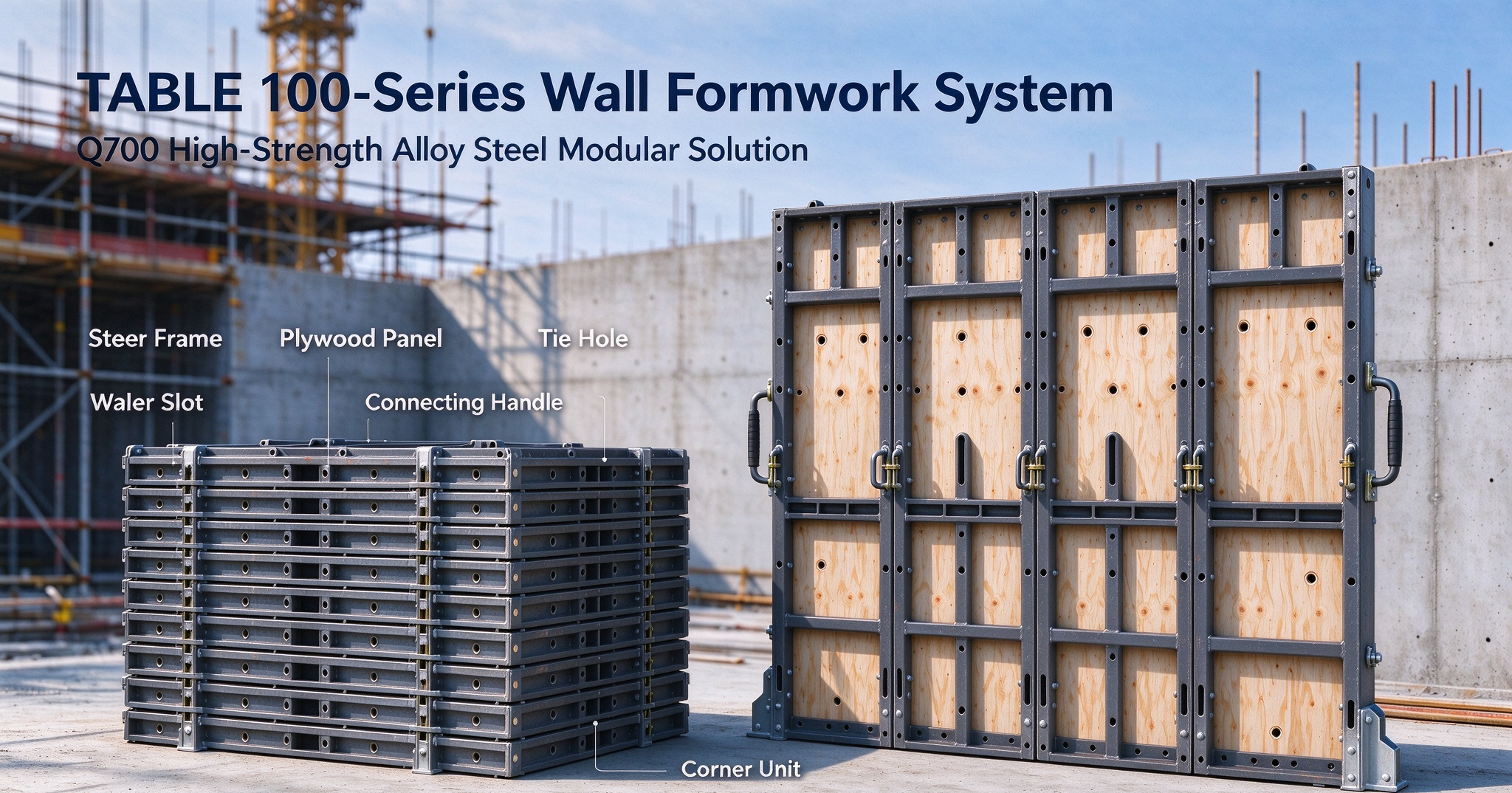
TABLE 100‑Series Wall Formwork System: Q700 High‑Strength Alloy Steel Modular Formwork Solution
Introduction
As core tooling for concrete forming, building formwork directly determines construction efficiency, finished concrete quality and overall project cost. Conventional plastic formwork is prone to bulging and damage; ordinary steel formwork suffers excessive dead weight; full aluminium formwork requires high upfront capital investment. The construction industry demands a new‑generation formwork solution balancing lightweight performance, high strength and broad compatibility.
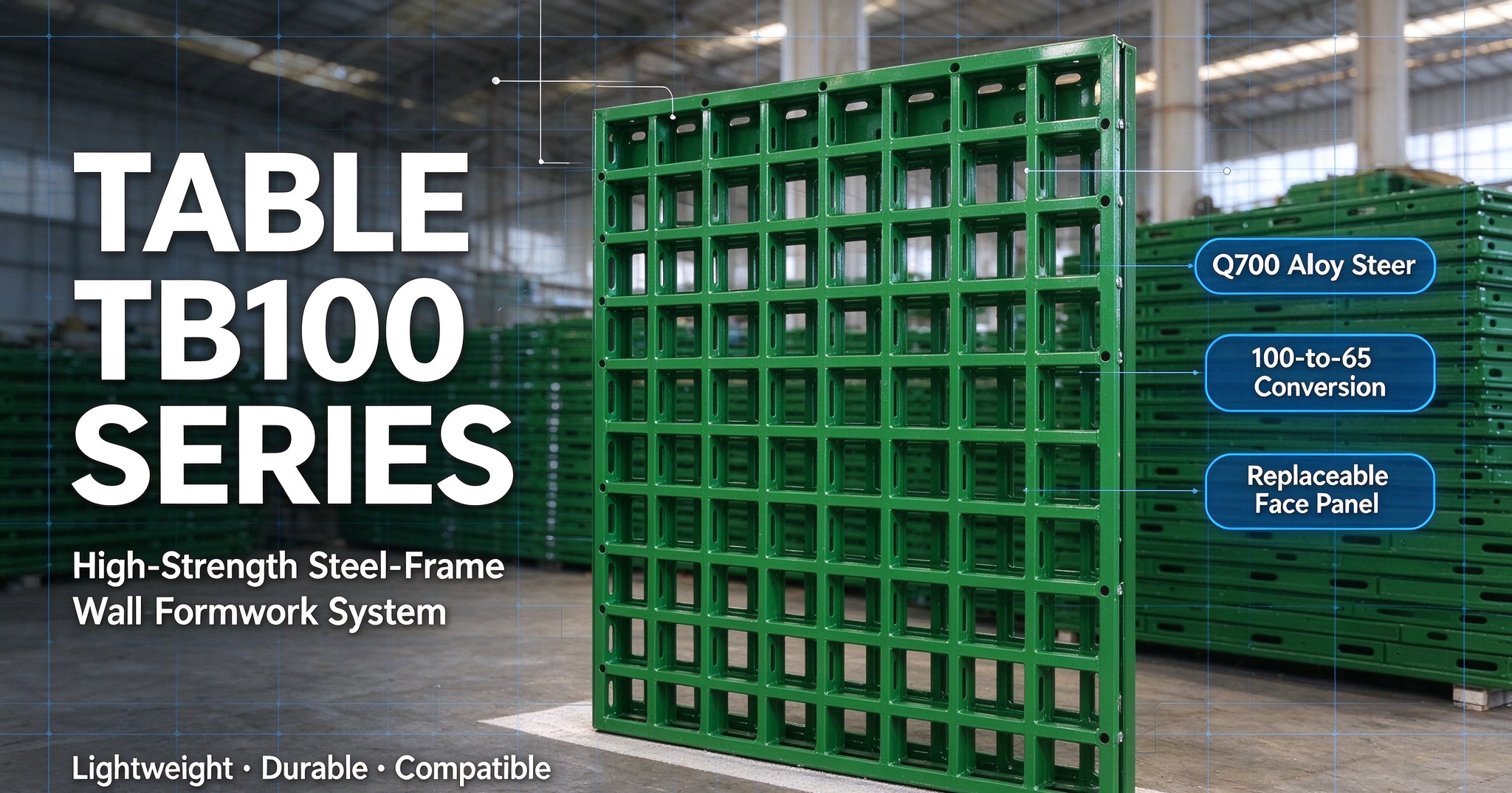
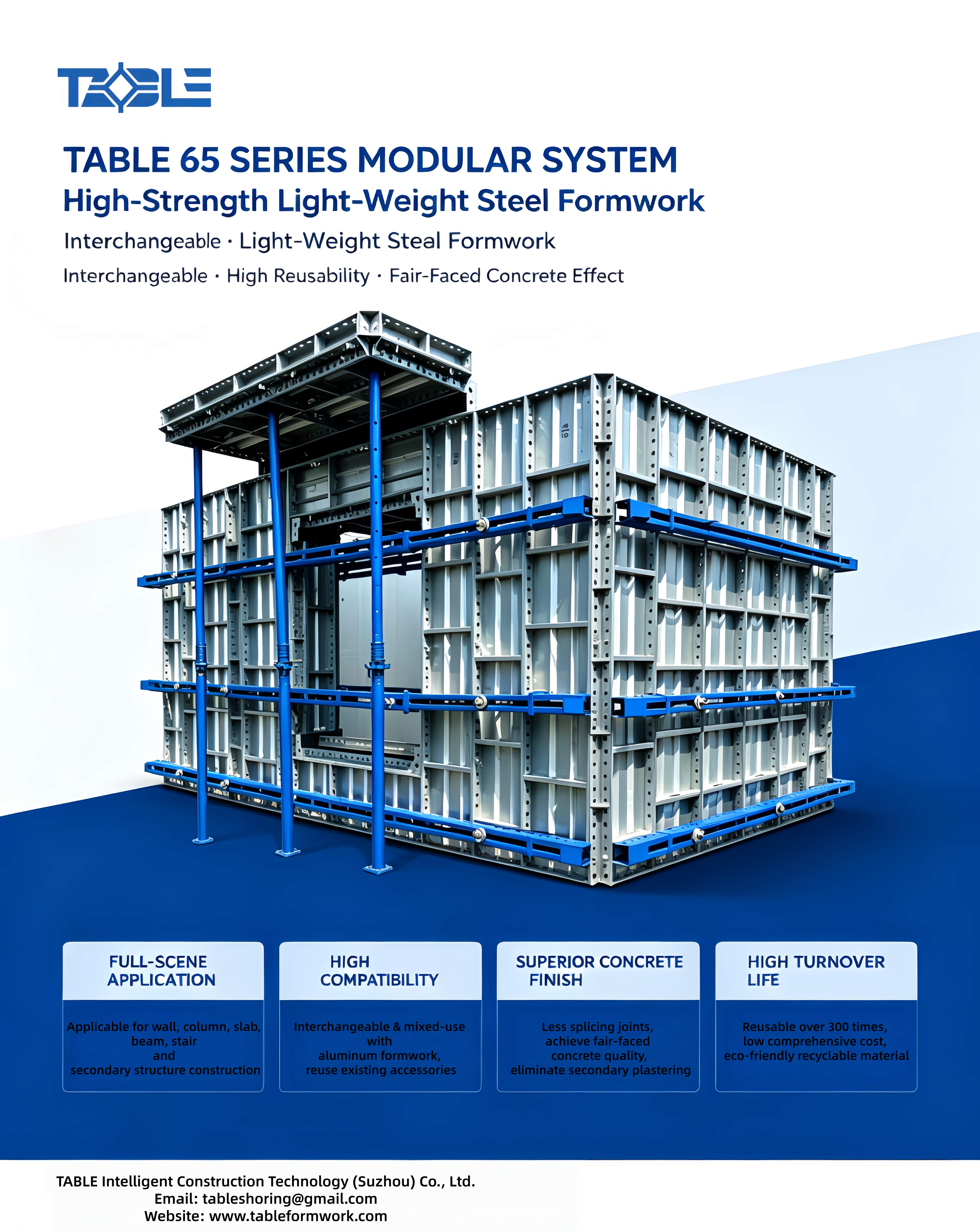
The TABLE 100‑Series wall formwork system is an innovated modular formwork developed with over 20‑year expertise in formwork & scaffolding manufacturing. Fabricated from Q700/Q550 high‑strength alloy steel, this system comes with built‑in tie holes and waler slots. One single system covers casting for walls, columns and slabs. Dedicated transition adapters enable combined assembly with 65‑series aluminium / steel formwork. It is fully compatible with mainstream commercial 100‑series plastic formwork, so existing panels and accessories can be reused to cut project renovation & upgrading costs.
Core Technical Advantages
1. Material & Anti‑Corrosion Treatment
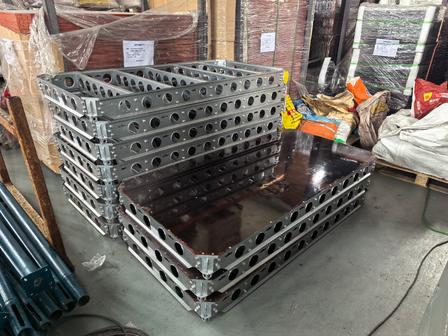
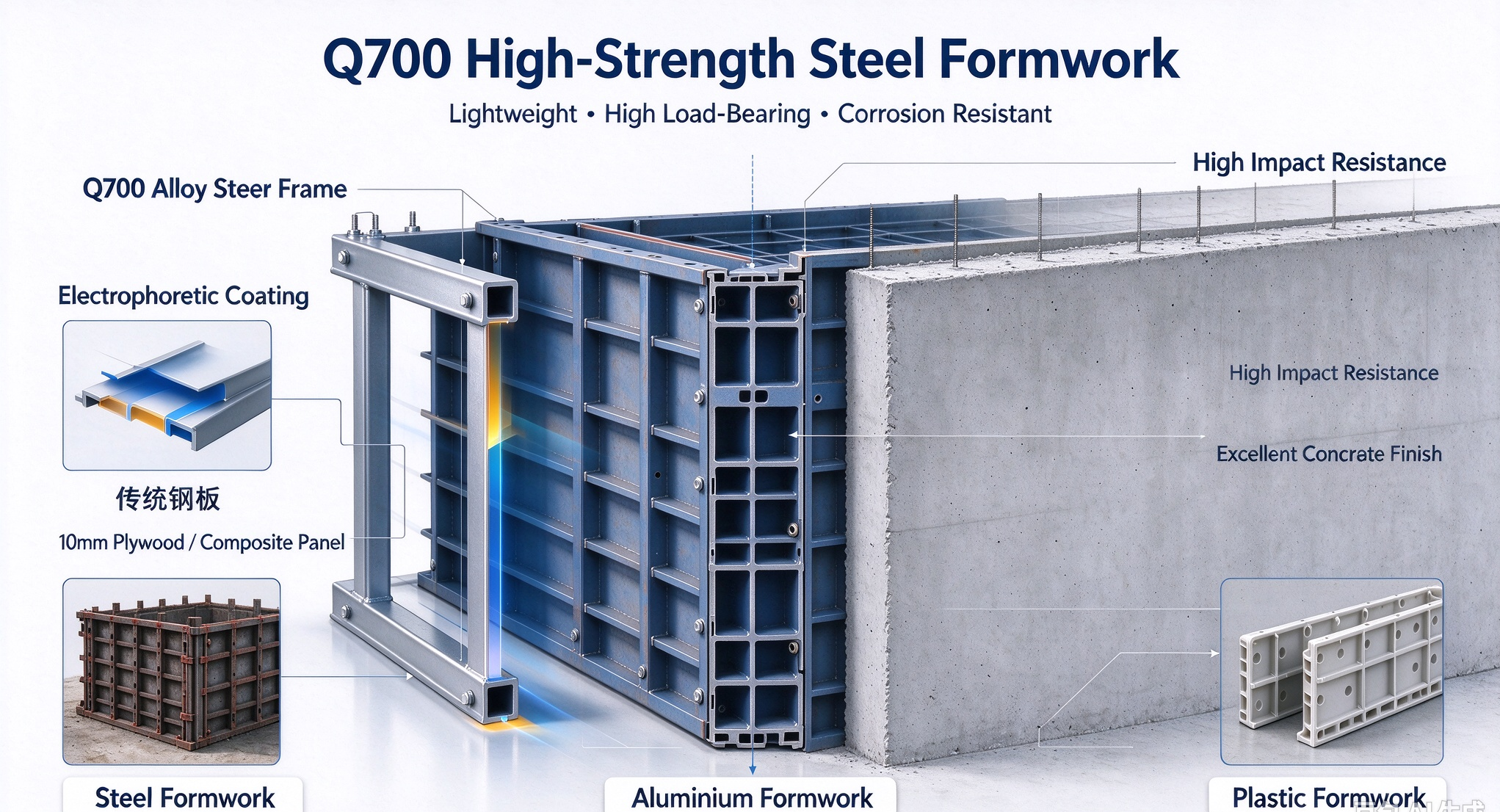
Frames are manufactured from Q700 / Q550 high‑strength alloy steel with full‑frame electrophoretic anti‑rust treatment. Compared with ordinary spray painting, electrophoretic coating delivers stronger adhesion and resists large‑area peeling from site impact, providing excellent protection against construction mud and rainwater. A 10 mm plywood or composite board is embedded inside the steel frame. Damaged facing panels can be replaced separately instead of scrapping the whole panel.
Under equivalent load‑bearing capacity, its weight is comparable to aluminium and plastic formwork, while the steel frame delivers superior impact‑resistance and anti‑bulging performance.
2. Cross‑System Conversion Capacity
Purpose‑built transition components support conversion between 100‑series and 65‑series formwork, for both straight joint and 90‑degree corner conditions.
‑ Trans‑Panels: for straight‑line connection
‑ Trans‑IC inner corner adapters: for corner connections
No on‑site cutting or welding is required. Direct assembly allows hybrid construction of high‑strength steel formwork and aluminium formwork, satisfying projects requiring partial aluminium formwork combined with steel formwork.
3. High Compatibility
Dimensions, hole layout and operating logic remain consistent with mainstream 100‑series plastic formwork (such as UO formwork). Existing old panels, locking handles and hardware accessories on‑site can keep in service. Contractors can place phased orders to replace worn‑out panels without full‑scale discard of existing stock, easing capital pressure.
4. Complete Component Range for Full Construction Conditions
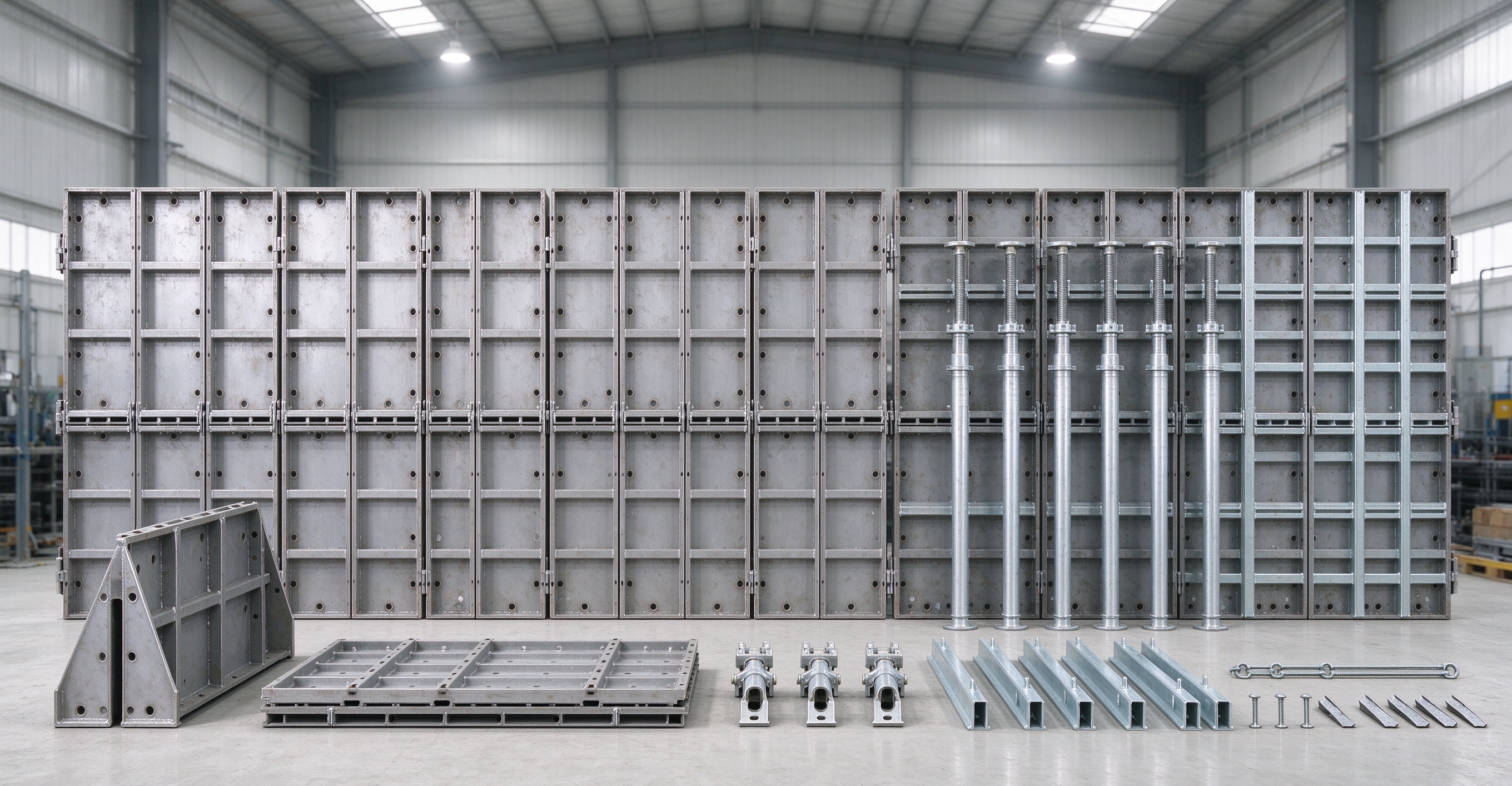
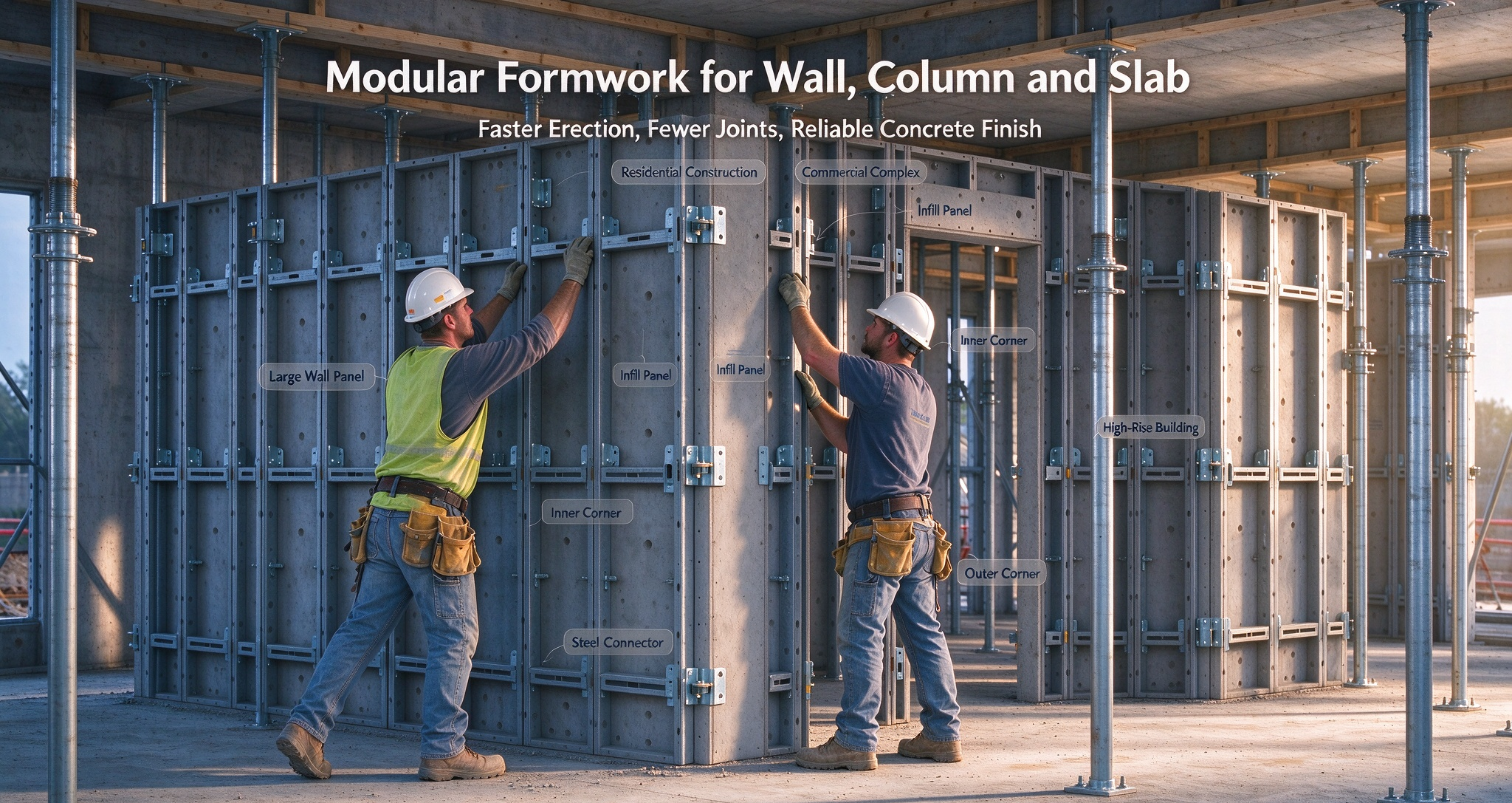
The full product portfolio includes large main wall panels, infill narrow panels, OC outer corner units, IC inner corner units, 100‑to‑65 transition members and upgraded steel connection hardware.
‑ Large‑size panels (WP1350×900, WP600×900 etc.): speed up erection, minimise joints and guarantee fair‑faced concrete finish.
‑ WP150‑series narrow infill panels: for dimension adjustment around openings and beam‑column gaps.
‑ OC / IC corner units: for 90‑degree wall corner forming.
‑ Upgraded steel accessories: connecting handles, bolts & nuts, straight waler bolts for enhanced wear resistance and longer re‑use cycles.
One unified formwork system serves walls, structural columns and floor slabs. It reduces on‑site formwork categories and simplifies warehouse management.
Typical Application Scenarios
✅ High‑rise residential buildings, commercial complexes and public infrastructure projects
✅ Projects targeting high re‑use cycles and long‑term total‑cost‑of‑ownership benefits
✅ Ongoing or renovation projects with existing 100‑series formwork for phased upgrading
✅ Hybrid steel‑aluminium projects requiring interface between 100‑series and 65‑series formwork
✅ Humid construction sites where conventional formwork suffers rapid corrosion or damage
❌ Not recommended for:
‑ Single‑pour projects pursuing minimum one‑off purchase cost
‑ Projects adopting full 65‑series aluminium formwork with zero requirement for 100‑series panels
Manufacturer Supporting Services
TABLE Intelligent Construction Technology (Suzhou) Co., Ltd supplies a complete product range covering wall & column formwork, slab formwork, shoring systems and climbing formwork. Our technical support includes formwork layout design, transition‑component selection, bill‑of‑material generation and full‑range product supply.
Frequently Asked Questions (Q&A)
Q1: Can TABLE 100‑series wall formwork be used for columns and slabs, or is it only for walls?
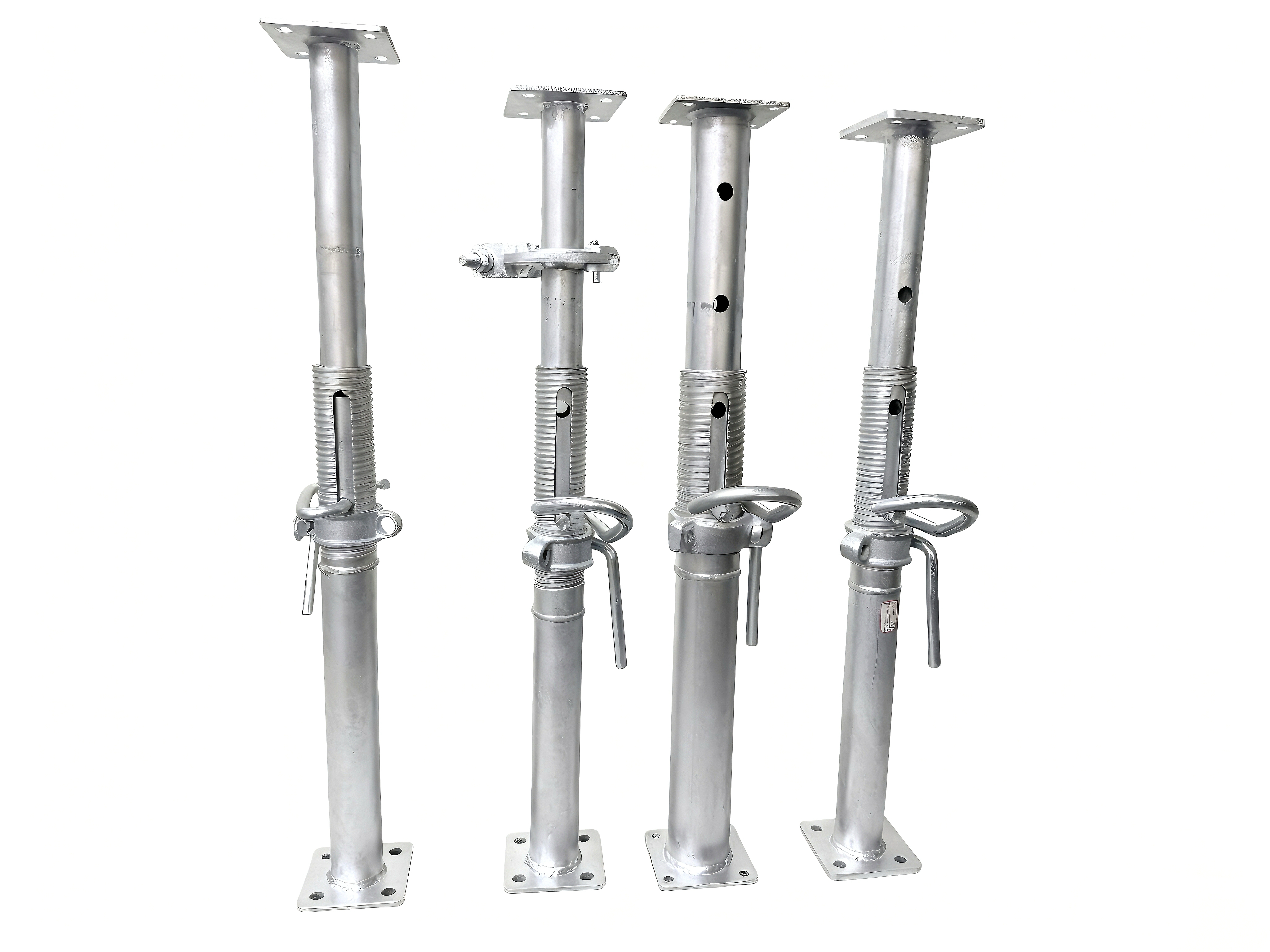
A:This formwork works for walls, columns and floor slabs rather than walls only. Assemble with inner / outer corner components for square column casting. Combined with shoring systems, it can be deployed for slab construction. One formwork system handles multiple applications and cuts down on‑site formwork inventory.
Q2: I already own other brands’ 100‑series plastic formwork. Can I mix‑use them with TABLE 100‑series panels?
A: Yes, mixed assembly is fully supported. Dimensions, hole pattern and operating method match mainstream 100‑series formwork on the market. Existing panels, locking handles and hardware can continue to be used. You can purchase panels in batches to replace worn‑out stock gradually.
Q3: How does 100‑series formwork connect with 65‑series aluminium formwork? What accessories are needed?
A: Dedicated transition assemblies realise straight‑joint and 90‑degree corner connection. Trans‑Panels handle straight joints; Trans‑IC inner corner adapters handle corners. Assemble directly on‑site without cutting or welding to achieve hybrid steel‑aluminium formwork construction.
Q4: In what aspects does Q700 high‑strength steel formwork hold cost advantages versus aluminium formwork?
A: Firstly, upfront procurement cost is lower than full aluminium formwork packages. Secondly, compatibility with existing formwork allows phased procurement and relieves project capital burden. Thirdly, electrophoretic‑treated high‑strength steel achieves high re‑use cycles and lowers amortised cost per pour. Fourthly, partial aluminium‑formwork integration avoids full‑project aluminium‑formwork investment. Finally, facing panels can be replaced individually, keeping maintenance expenses low.
Q5: How is the service life of electrophoretic anti‑corrosion formwork under humid site conditions?
A: Full‑frame electrophoretic treatment provides better coating adhesion than ordinary painting and defends against construction mud and rain. Q700 high‑strength alloy steel base material outperforms ordinary carbon steel in corrosion resistance. Still, clean concrete residue and proper storage after each pour will further extend service life. Plywood facings are consumable items and shall be replaced periodically according to site conditions.
Q6: Are formwork accessories durable? Can old existing accessories still be reused?
A: Connecting handles, bolts and waler bolts are upgraded steel hardware with high wear‑resistance and long re‑use life. Meanwhile, these accessories are interchangeable with standard 100‑series formwork hardware from other suppliers, so your existing accessories can remain in service.
Q7: For which projects is TABLE 100‑series formwork not recommended?
A: It is not suitable for single‑pour projects chasing rock‑bottom one‑off purchase cost. It is also not recommended for projects with pure 65‑series aluminium‑formwork design and no 100‑series application requirements.
Q8: What technical support can the manufacturer provide?
A: Our services include formwork layout design, transition‑component selection consultation, bill‑of‑material preparation and product supply. Our full‑line products cover wall‑column formwork, slab formwork, shoring and climbing formwork solutions.