Introduction
For construction companies and formwork suppliers worldwide, one question comes up repeatedly: can steel formwork and aluminum formwork be used together on the same project? It's a logical question. Steel formwork offers unmatched durability and long-term value, while aluminum formwork is known for its lightweight and established market presence. What if you could combine the strengths of both?
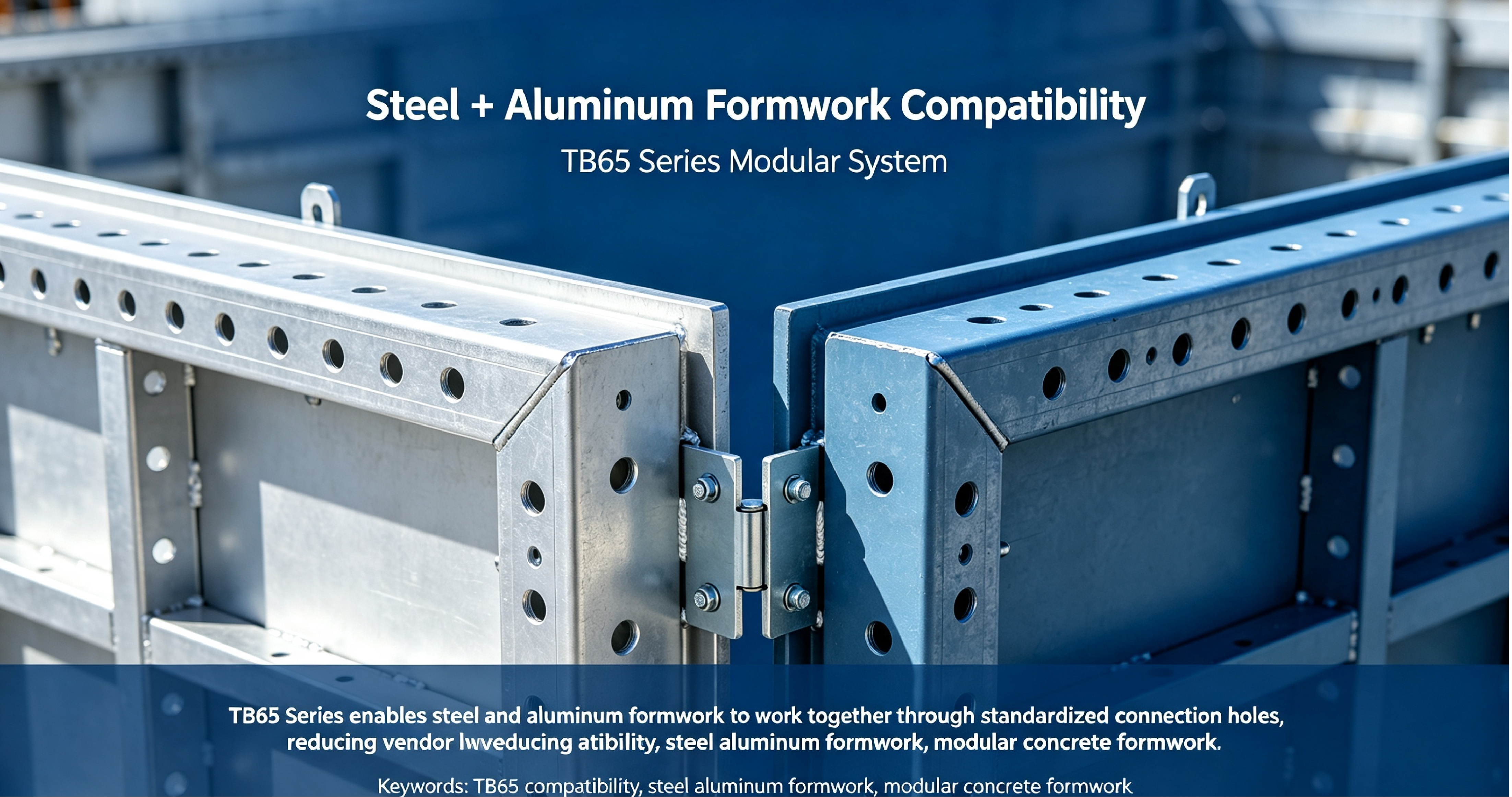
For years, the answer has been no—most formwork systems are designed as closed ecosystems, with proprietary connection systems that make cross-material compatibility impossible. But the TB65 Series Modular System is changing the game. Built from the ground up for full aluminum formwork compatibility, it enables construction teams to mix high-strength steel panels with existing aluminum formwork seamlessly.
In this article, we break down exactly how steel-aluminum formwork compatibility works, why it matters, and how it can transform your construction economics.
The Compatibility Challenge: Why Most Systems Can Not Mix
Before we dive into the solution, it is important to understand why formwork compatibility is so rare in the industry.
Traditional formwork systems—whether steel or aluminum—are typically designed with proprietary connection systems. Panel sizes, hole patterns, and connection hardware are all unique to each manufacturer. This means:
- No interchangeability: Panels from different systems simply do not fit together
- Vendor lock-in: Once you invest in one system, you are stuck buying all future panels from the same supplier
- Wasted inventory: Upgrading to a better system means writing off your existing formwork investment
- Limited flexibility: You cannot optimize material selection based on specific project needs
For construction companies managing large formwork fleets, this lack of compatibility is a major pain point. It limits flexibility, increases costs, and makes it difficult to adopt new technologies without massive capital expenditure.
How TB65 Achieves Full Aluminum Formwork Compatibility
The TB65 Series was engineered with one critical design principle in mind: seamless interoperability with standard aluminum formwork systems. Every dimension, connection point, and structural detail is designed to match industry-standard aluminum formwork specifications.
Here is how it works:
1. Standardized Hole Patterns and Connection Points
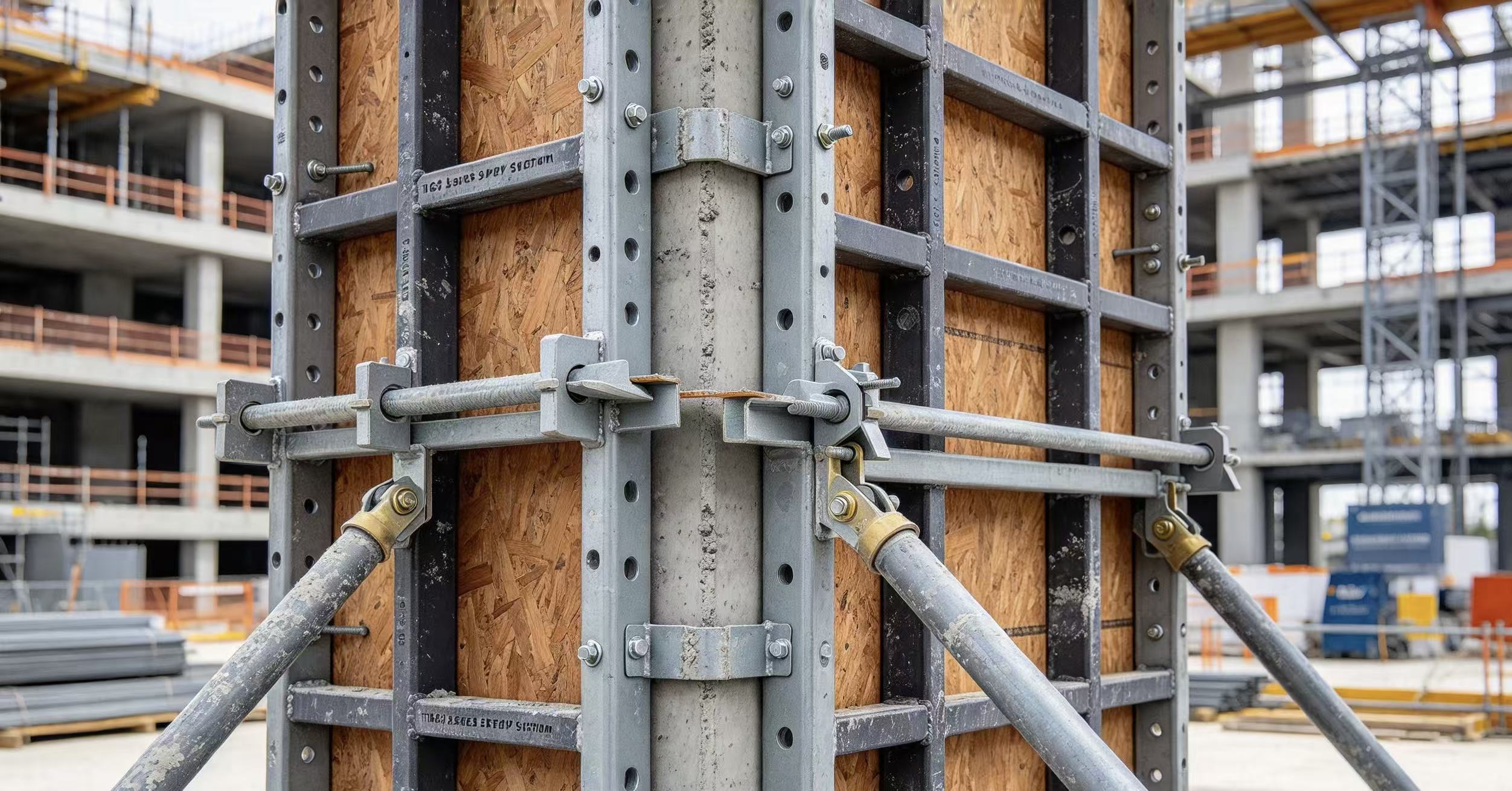
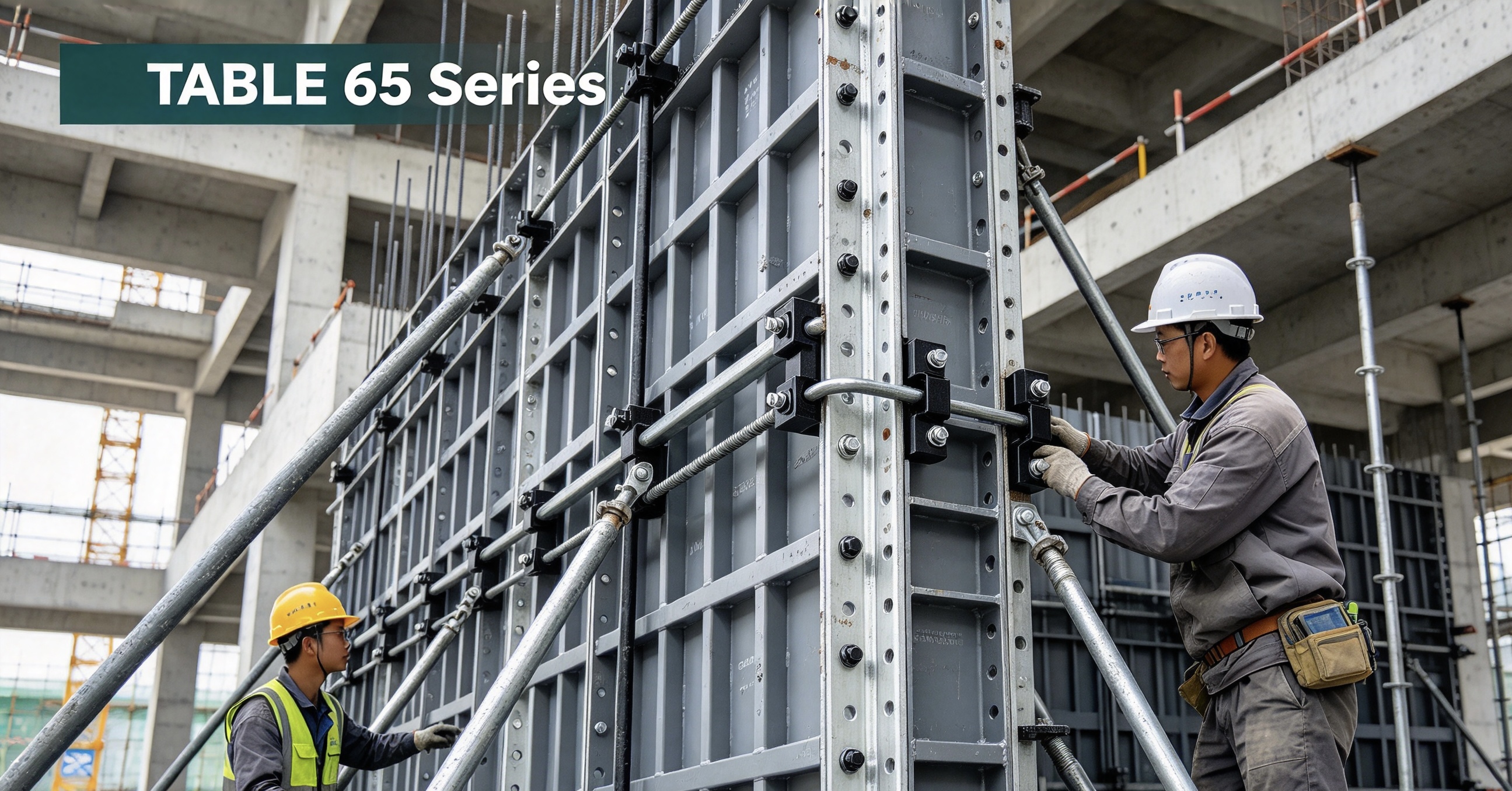
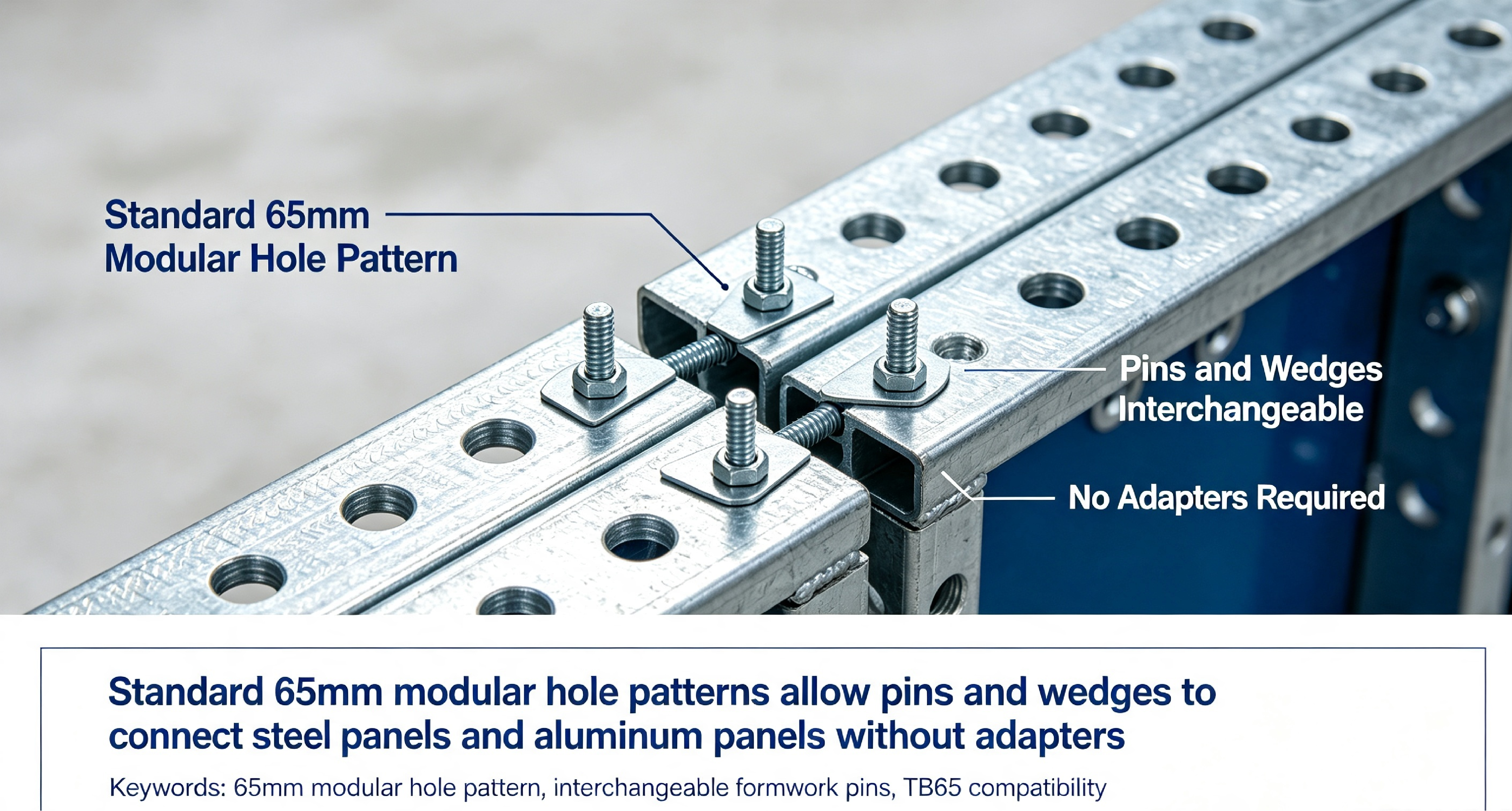
TB65 steel panels feature the same hole spacing and connection geometry as standard aluminum formwork panels. This means pins, wedges, and other connection hardware work interchangeably between steel and aluminum panels. No adapters, no modifications, no special tools required.
2. Matching Panel Dimensions and Module Sizes
The entire TB65 system is built around standard modular dimensions that align perfectly with aluminum formwork sizing. Panels, corners, and accessories all fit together regardless of material, creating a truly unified formwork system.
3. Compatible Support and Accessory Systems
It is not just the panels. TB65 supports, walers, and accessories are all designed to work with existing aluminum formwork support systems. This means you can use your existing steel props, waler brackets, and other accessories with TB65 steel panels—and vice versa.
Bottom line: TB65 steel panels drop into your existing aluminum formwork setup as if they were designed to be there—because they were.
5 Key Benefits of Mixed Steel-Aluminum Formwork
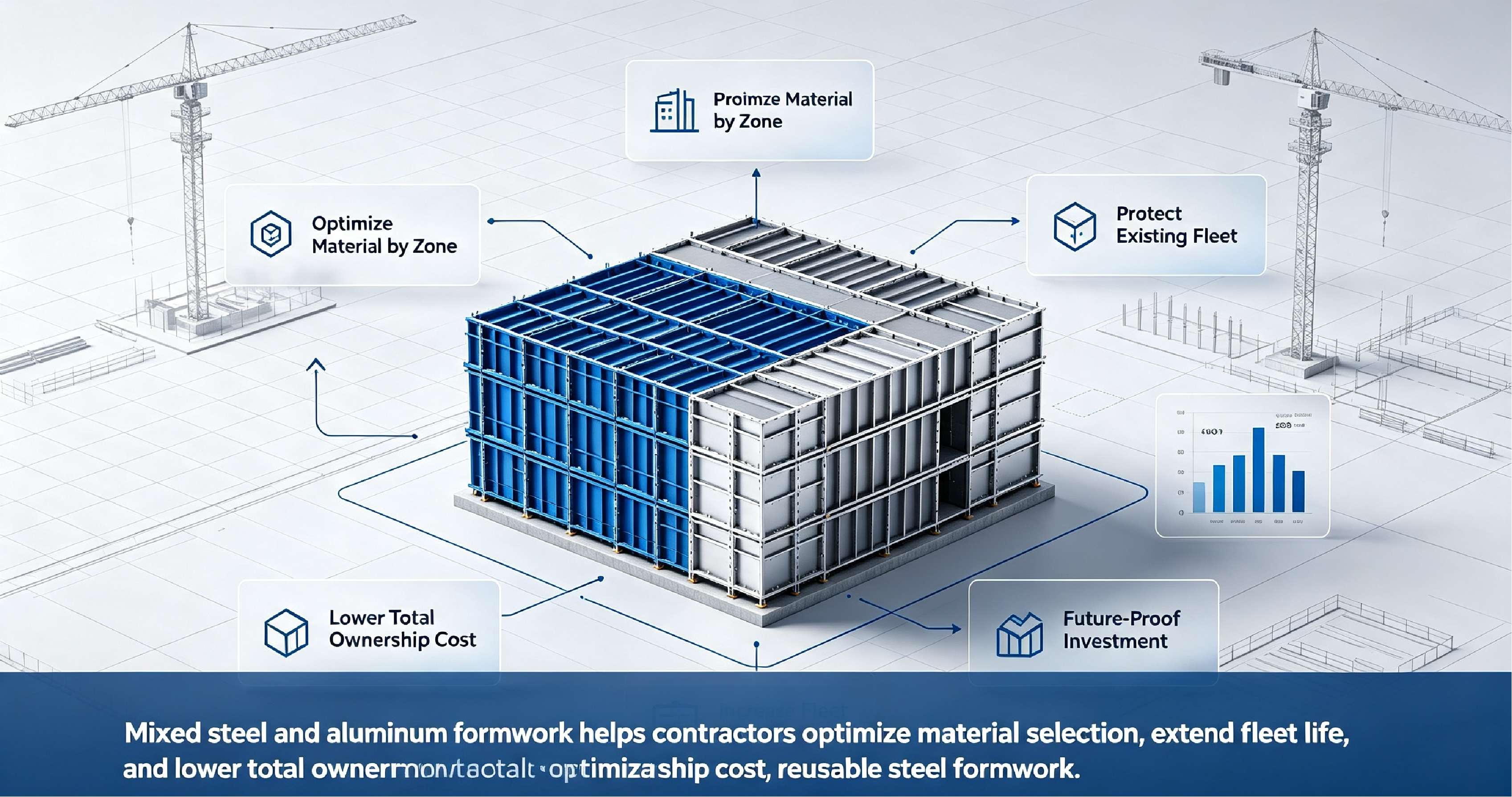
Why does compatibility matter? Because mixing steel and aluminum formwork gives you the best of both worlds—along with some unexpected advantages.
1. Optimize Material Selection by Application
Different parts of a building have different formwork requirements. High-wear areas like columns and wall corners benefit from the extra durability of steel. Larger flat wall sections can use aluminum for maximum weight savings. With TB65 compatibility, you can assign the right material to the right job—optimizing both performance and cost across your entire project.
2. Protect Your Existing Investment
If you already own aluminum formwork, upgrading to steel does not mean starting over. TB65 lets you gradually integrate steel panels into your existing fleet, replacing aluminum panels as they wear out or as budget allows. This protects your capital investment and makes technology adoption financially feasible.
3. Reduce Total Cost of Ownership
Steel formwork offers significantly higher reusability (300+ uses vs. 150-200 for typical aluminum), which means lower cost per use over time. By strategically using steel panels in high-wear applications and aluminum elsewhere, you can extend the overall life of your formwork fleet and reduce long-term replacement costs.
4. Increase Fleet Flexibility
Projects come in all sizes and configurations. With a mixed steel-aluminum fleet, you have the flexibility to scale and adapt to different project requirements. Need more panels for a large project? Use both steel and aluminum together. Have a smaller job where weight is critical? Stick with aluminum. The choice is yours.
5. Future-Proof Your Formwork Investment
The construction industry is constantly evolving. With a compatible, multi-material formwork system, you are not locked into a single technology or supplier. You can adopt new materials and innovations as they emerge—without abandoning your existing inventory.
Real-World Applications: When to Mix Steel and Aluminum
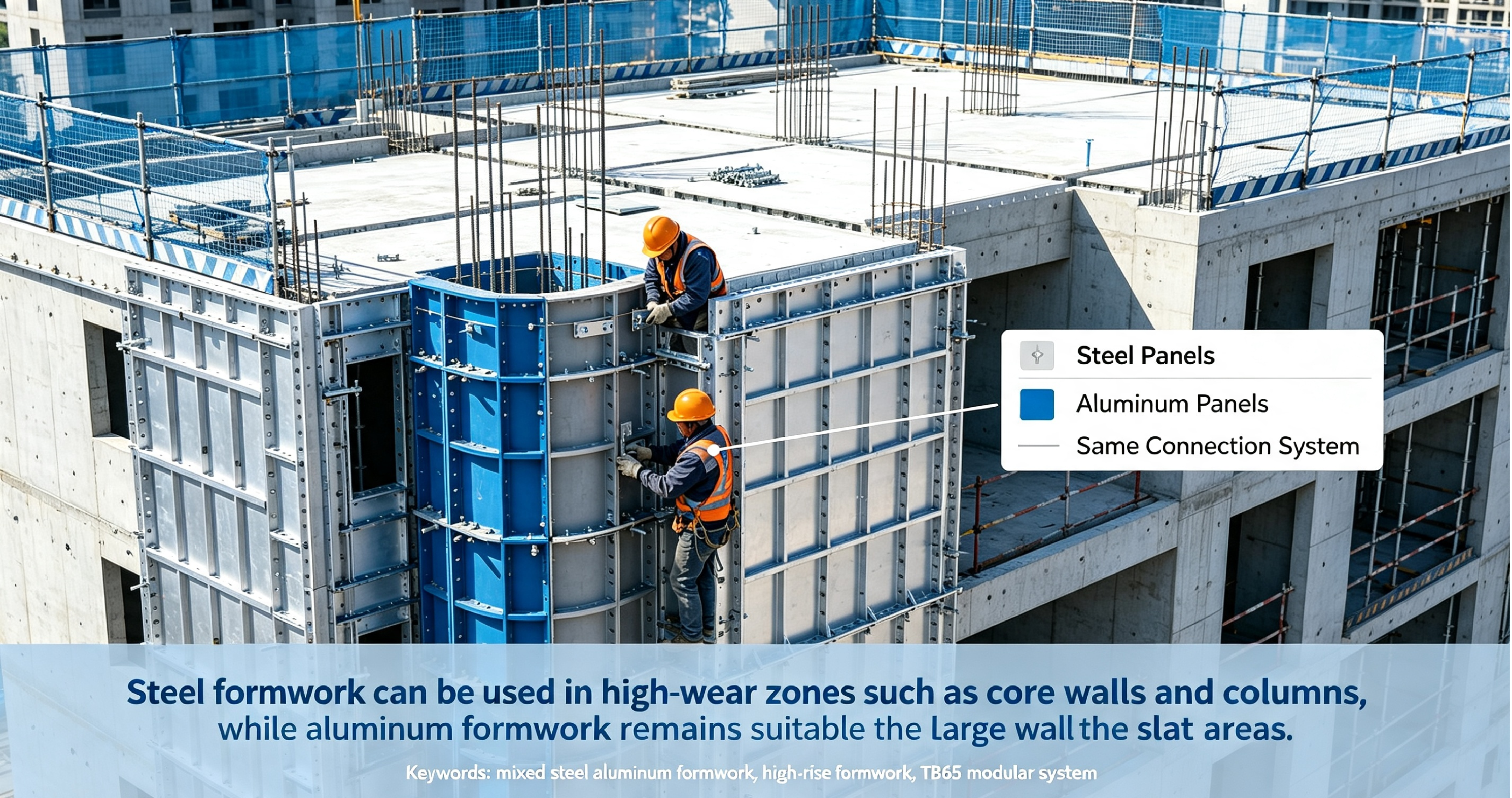
Wondering how mixed steel-aluminum formwork works in practice? Here are some common scenarios where compatibility delivers real value:
High-Rise Residential Projects
In high-rise construction, formwork gets used repeatedly on identical floor plates. This is where steel formwork really shines—its 300+ reuse cycle means it can handle dozens of floors without degradation. But you do not need to replace your entire aluminum fleet. Use TB65 steel panels for core walls and columns (high-wear, high-cycle areas) while keeping aluminum for slab formwork (lower wear, weight-sensitive).
Gradual Fleet Replacement
Many construction companies have significant capital tied up in aluminum formwork. Replacing it all at once is often not financially practical. TB65 compatibility lets you replace panels incrementally—starting with the most heavily used sections, then expanding as ROI justifies further investment. This turns a massive capital expenditure into a manageable, phased investment.
Mixed Project Portfolios
Companies that work on both residential and commercial projects face different formwork requirements for each. A mixed steel-aluminum fleet gives you the versatility to handle any project type—from high-rise towers that demand maximum durability to low-rise commercial projects where speed and weight are priorities.
Emergency Fleet Expansion
Sometimes you land a big project and need more formwork—fast. With TB65 compatibility, you can add steel panels to your aluminum fleet immediately, without waiting for custom aluminum orders or investing in an entirely new system. This lets you take on bigger projects without inventory bottlenecks.
How to Transition from Aluminum to Steel Formwork Gradually
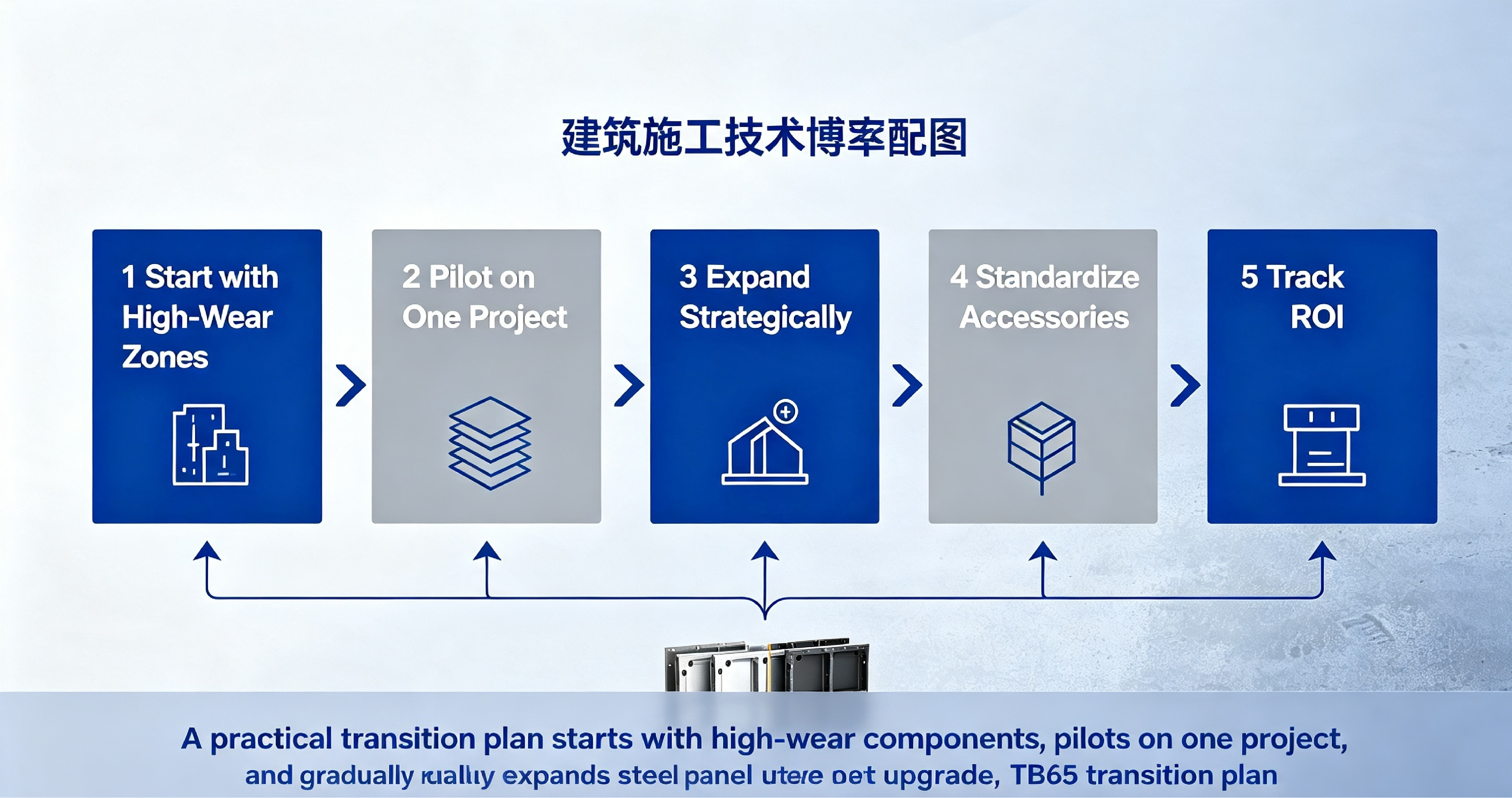
Ready to start integrating steel formwork into your aluminum fleet? Here is a practical, step-by-step approach:
- Start with high-wear components: Begin by replacing aluminum panels in areas that see the most abuse—column corners, wall edges, and frequently used standard panels. These are the areas where steel durability delivers the fastest ROI.
- Test on a single project: Run a pilot project with a mix of TB65 steel and your existing aluminum formwork. Verify compatibility, assess performance, and gather feedback from your construction team before scaling up.
- Expand strategically: Based on your pilot results, gradually expand steel panel usage across your fleet. Focus on areas where steel delivers the most value—high-cycle applications, durability-critical sections, and components that frequently need replacement.
- Standardize accessories: As you add more steel panels, standardize on shared accessories and support systems. This simplifies inventory management and reduces the number of unique parts you need to stock.
- Track ROI: Monitor reuse cycles, maintenance costs, and replacement frequency for both steel and aluminum panels. This data will help you make informed decisions about future fleet composition.
Common Questions About Steel-Aluminum Compatibility
Will mixed steel and aluminum formwork affect concrete finish quality?
No. Both TB65 steel panels and aluminum formwork deliver smooth, high-quality concrete surfaces that meet fair-faced concrete standards. The precision manufacturing ensures consistent panel flatness regardless of material, so you get uniform finishes across the entire structure.
Do I need special tools or training to mix steel and aluminum panels?
Absolutely not. TB65 steel panels use the same connection hardware and assembly methods as standard aluminum formwork. If your team knows how to assemble aluminum formwork, they already know how to work with TB65. No special training, no new tools, no learning curve.
Does mixing materials affect structural performance?
Not at all. TB65 steel panels are engineered to meet or exceed the structural performance of aluminum formwork. The connection system is designed to distribute loads evenly across both materials, ensuring consistent structural integrity throughout the formwork system.
Can I use TB65 panels with any brand of aluminum formwork?
TB65 is designed to be compatible with industry-standard aluminum formwork systems that use common modular dimensions and connection patterns. Most major aluminum formwork brands use these standard specifications, making TB65 integration straightforward.
Conclusion
For too long, construction companies have been forced to choose between steel and aluminum formwork—each with its own strengths and weaknesses. But with the TB65 Series Modular System, that choice is no longer necessary.
Full aluminum formwork compatibility means you can combine the unmatched durability and long-term value of steel with the lightweight handling and established infrastructure of aluminum. It protects your existing investment, reduces total cost of ownership, and gives you the flexibility to optimize your formwork fleet for every project.
Whether you are looking to gradually upgrade your aluminum fleet, expand your formwork capacity, or simply get more value from your existing investment, TB65 steel-aluminum compatibility delivers a smarter, more flexible approach to concrete formwork.
The future of formwork is not steel vs. aluminum. It is steel and aluminum—working together.
Ready to explore steel-aluminum formwork compatibility? Contact our team to learn how TB65 can integrate with your existing formwork fleet and deliver measurable cost savings from day one.