1. Pre-Construction Preparation: Plan First, Quality Materials Second
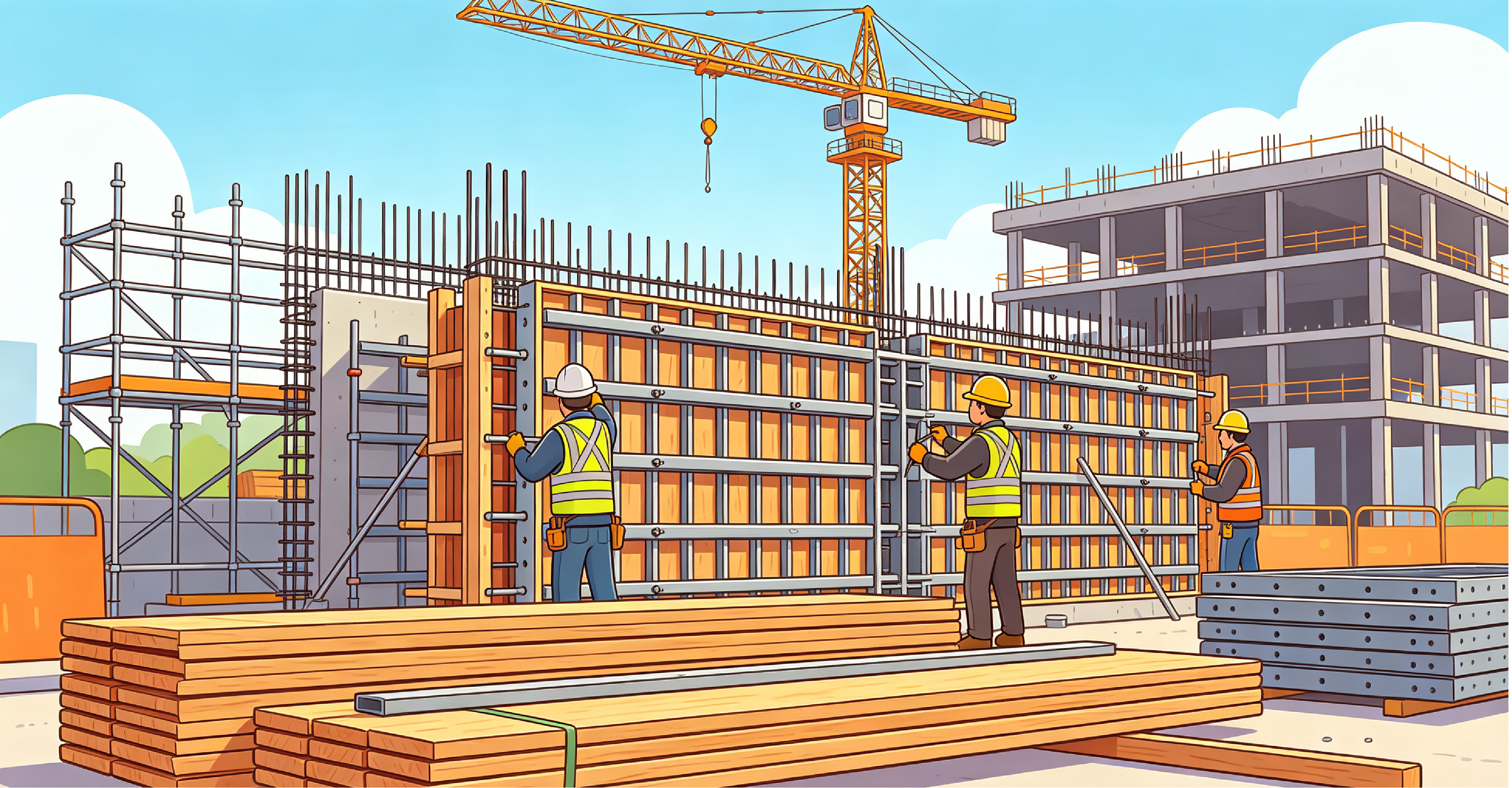
Quality control of formwork engineering must start from the source. The adequacy of pre-construction preparation directly determines the smoothness of subsequent construction.
1.1 Special Construction Plan Development
Formwork engineering requires a special construction plan, which is a mandatory requirement under the "Code for Construction of Concrete Structures" GB 50666. The plan should be designed based on engineering structure form, load magnitude, foundation soil type, construction equipment, and material supply conditions to ensure formwork and supports have sufficient bearing capacity, stiffness, and overall stability.
For tall formwork support projects (erection height ≥8m, span ≥18m, total construction load ≥15kN/m², concentrated line load ≥20kN/m), expert review is required. Implementation must strictly follow the reviewed and approved plan. Unauthorized changes to key parameters such as vertical pole spacing and horizontal bar step distance are strictly prohibited.
1.2 Material Inspection Upon Arrival N
The quality of formwork materials is the foundation of project quality. Strict inspection must be conducted upon arrival, and unqualified materials are strictly prohibited from use.
Wooden formwork: Surface should be flat without warping, crack width shall not exceed 0.1mm, moisture content should be controlled between 15-25%, and moisture-proof and anti-corrosion treatment should be applied before use.
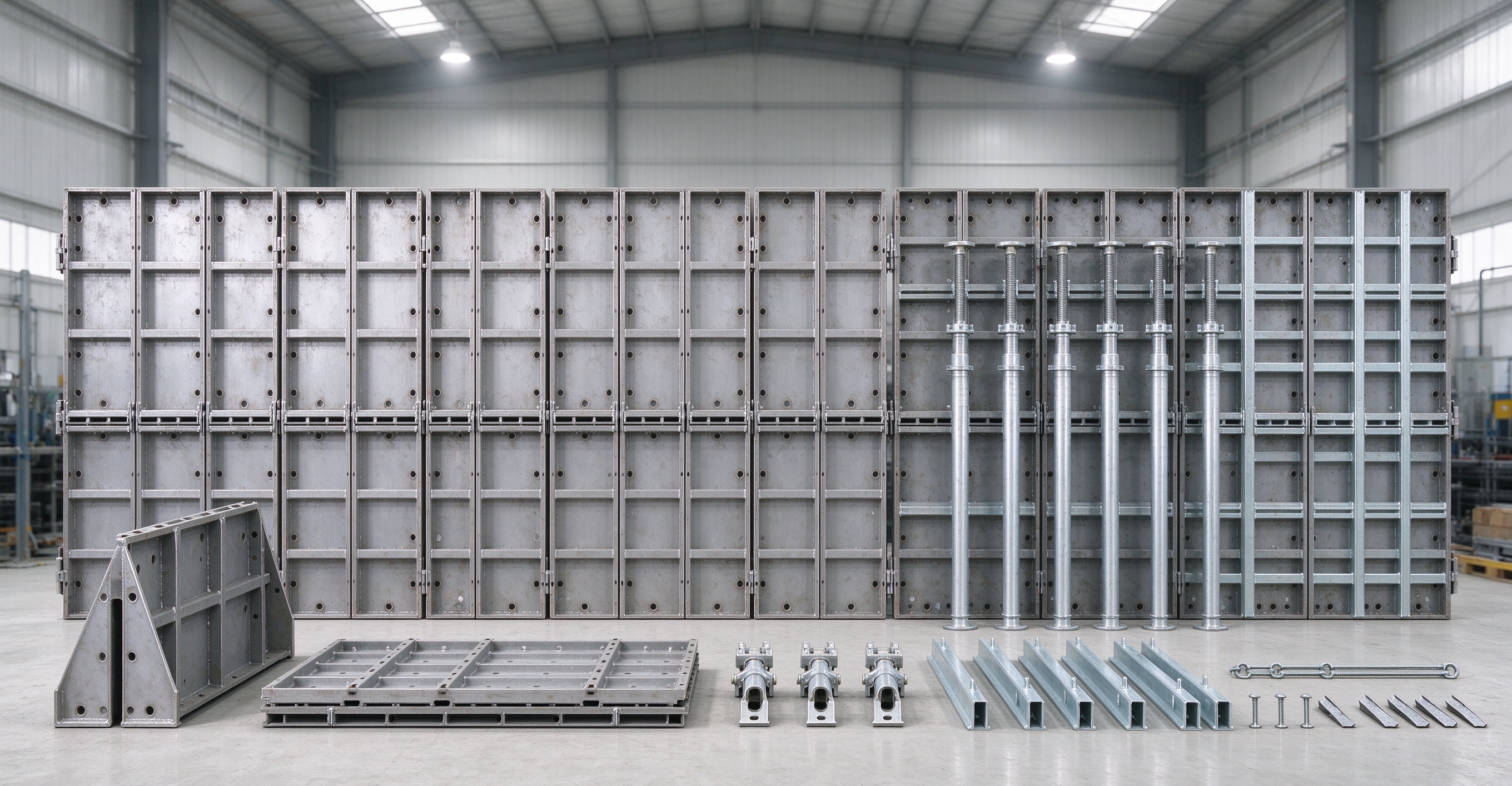
Steel formwork: Check for defects such as deformation, rust, and weld failure. Connectors (U-clips, pins, bolts) should be complete with adequate strength. Steel formwork offers the advantages of high turnover times and excellent forming quality, making it particularly suitable for highly standardized components.
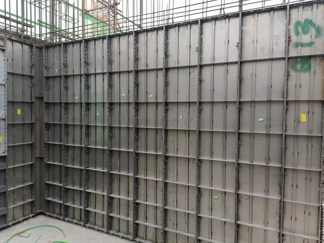
Aluminum alloy formwork: As a rapidly promoted new formwork system in recent years, aluminum formwork features light weight, high strength, high turnover times (up to 100+), and excellent forming quality. Before use, focus on checking connector strength and overall stiffness.
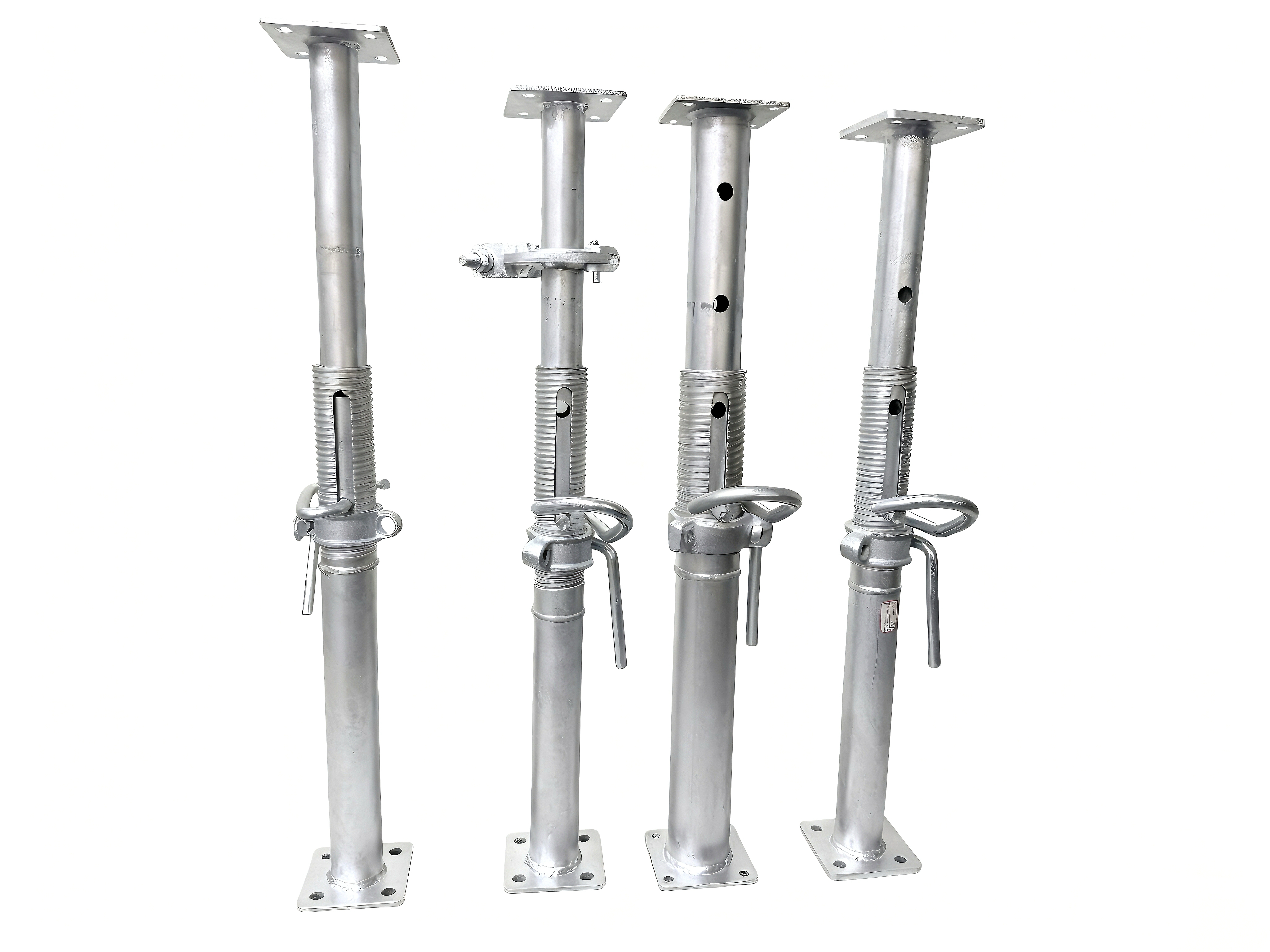
Support system materials: Steel pipes, fasteners, jacks, and other components must have product certificates and test reports. Steel pipes with bending deformation, severe rust, or cracks are strictly prohibited. Fastener bolt tightening torque should be controlled between 40N·m and 65N·m.
1.3 Personnel Qualifications and Technical Briefing
Formwork erection and stripping operations are special operations. Workers must hold construction special operation qualification certificates (scaffolder), with certificates within validity period. Uncertified work, work under the influence of alcohol, and work while ill are strictly prohibited.
The project technical director must conduct written safety technical briefings for all management personnel and work teams before operations, clarifying erection parameters, quality standards, and safety precautions for each part. Both the briefer and briefed parties must sign for confirmation. No work shall commence without briefing.
2. Formwork Installation: Precise Positioning, Stable Support
Formwork installation is the core segment of formwork engineering. Installation quality directly affects concrete forming results and construction safety.
2.1 Surveying, Setting-out and Positioning
Before formwork installation, precise surveying and setting-out must be performed, marking axis lines, edge lines, and elevation control lines. Column formwork roots should be positioned with steel bars, and slab formwork should control axes with theodolites or plumb bobs. Column position axis and elevation review error shall not exceed 3mm, which is the first line of defense for ensuring accurate component positioning.
2.2 Support System Erection
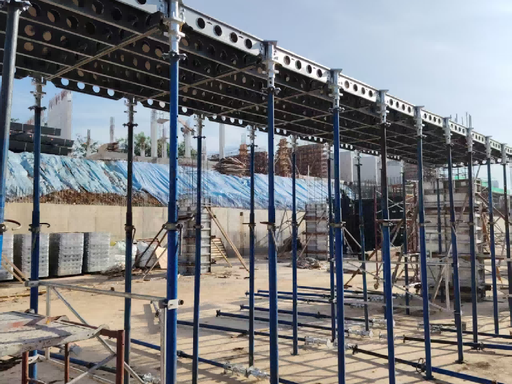
The support system is the "skeleton" of formwork and the top priority of safety management. The support foundation must be solid, and the bearing capacity of the lower structure must meet design requirements. Erection on soft soil or concrete that has not reached strength is strictly prohibited. Vertical pole erection shall meet the following requirements:
- Vertical pole spacing strictly follows the plan; arbitrary increase is strictly prohibited
- Vertical pole deviation should not exceed 1/200
- Sweeper bar height from ground shall not exceed 200mm
- Scissor brace angle should be between 45°~60°, lap length shall not be less than 0.8m, with no fewer than 2 fastener connections
- Connection nodes between diagonal bars and vertical poles must be secure
For tall formwork systems, horizontal safety nets should also be installed, and the frame should be rigidly connected to structural columns to ensure overall stability.
2.3 Formwork Assembly and Reinforcement
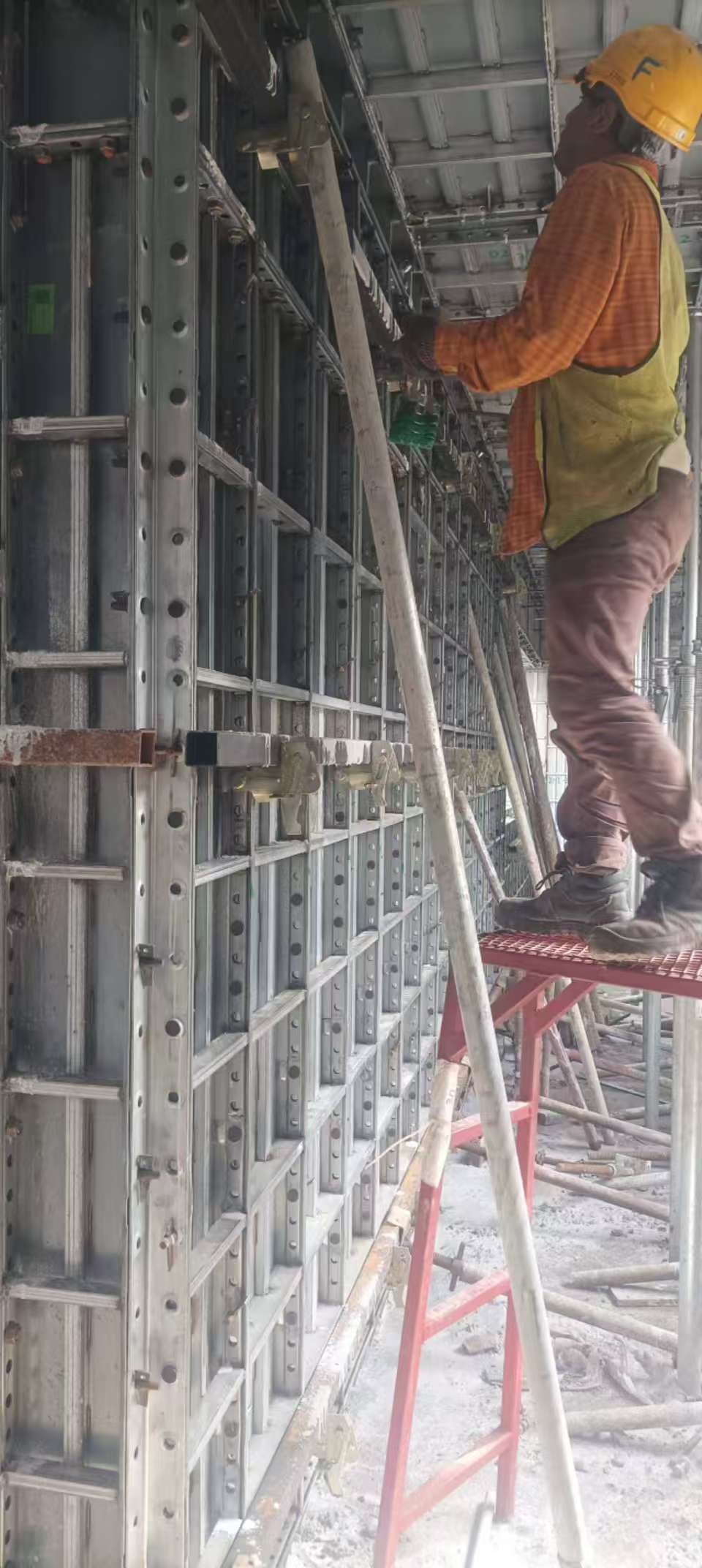
The key to formwork assembly lies in tight joints and reliable reinforcement. Joints are the main source of concrete leakage and must be carefully treated: vertical joints can use sealant or waterstop strips to ensure tight joints; U-clip or pin spacing shall not exceed 300mm to prevent misalignment at panel joints.
Regarding reinforcement measures, column clamp spacing is crucial, generally not exceeding 500mm, with appropriate densification at the bottom. Tie rods and steel pipe waling spacing must be set according to design, with uniform tightening torque to avoid formwork bulging or bursting. Shear wall tie rod spacing should meet calculation requirements to ensure accurate wall section dimensions.
2.4 Elevation and Verticality Control
After formwork installation is complete, comprehensive review of elevation, verticality, and flatness must be conducted. Using the "three-inspection method" (self-inspection, mutual inspection, handover inspection) can significantly reduce deviation rates.
Allowable deviation for floor height verticality: ≤6mm for ≤6m, ≤10mm for >6m. Height difference between adjacent panel surfaces shall not exceed 2mm, and surface flatness shall not exceed 5mm. These indicators directly affect the quality and cost of subsequent decoration works.
3. Quality Control: Details Determine Success or Failure
Quality control of formwork engineering runs through the entire construction process, requiring attention to every detail.
3.1 Common Quality Problems and Prevention
| Quality Problem | Cause | Prevention Measures |
| Axis deviation | Setting-out error, insecure formwork fixation | Strengthen survey review, install positioning bars at roots, increase supports |
| Formwork bulging/bursting | Insufficient reinforcement, excessive bolt spacing | Set tie rods per calculations, densify column clamps at bottom |
| Leakage and pitting | Loose joints, uneven release agent application | Apply sponge strips at joints, apply release agent evenly |
| Elevation deviation | Support settlement, lax elevation control | Compact foundation, set elevation control points, review before pouring |
3.2 Release Agent Application
The selection and use of release agents directly affect concrete surface quality. Appropriate release agents should be selected based on formwork material: oil-based release agents are suitable for steel formwork, while water-based release agents are suitable for wooden formwork. Application should be uniform, without missing spots, and not excessively dripping to contaminate reinforcement and concrete joints. It should be noted that release agents must not affect concrete structural performance, nor affect subsequent decoration works. Using waste engine oil and other inferior materials as substitutes for special release agents is strictly prohibited.
3.3 Embedded Parts and Reserved Holes
Embedded parts and reserved holes on formwork must be accurately positioned and firmly fixed. Before installation, quantity, specification, and position should be checked one by one according to design drawings, and special acceptance should be conducted after installation. Embedded parts should be fixed by welding or special fixtures, not just tied with iron wire, to prevent displacement during concrete pouring.
4. Safety Management: Safety First, Prevention Oriented
Formwork engineering is a high-risk area for construction safety accidents. Collapse, falls from height, and object strikes are the main risk types that must be strictly controlled.
4.1 Collapse Prevention Measures
Formwork collapse accidents often result in severe consequences with multiple fatalities and injuries, making them the top priority of safety management.
Plan first: Strictly erect according to the special plan; unauthorized changes to erection parameters are strictly prohibited. Tall formwork must undergo expert review.
Qualified materials: Steel pipes, fasteners, and other components must be inspected upon arrival; unqualified materials are strictly prohibited. Regular sampling inspection and maintenance of frame materials should be conducted. Assign dedicated personnel to monitor during erection. Arrange dedicated personnel to watch formwork during concrete pouring. Immediately stop work and evacuate personnel if abnormalities are found.
Load control: Stacking load on formwork shall not exceed design load; concentrated stacking of large amounts of materials is strictly prohibited. Concrete should be poured evenly to avoid excessive local load.
4.2 Fall Prevention Measures
Working at height is another major safety risk in formwork engineering. All workers must wear safety helmets and fasten safety belts when working at height. Safety belts should be hung high and used low.
Operation platforms must be stable with full decking, no protruding boards. Edge protection must be in place, with 1.2m high guardrails and 18cm high toe boards. Set up warning zones during formwork hoisting, with dedicated personnel commanding. Standing under hoisted objects is strictly prohibited.
4.3 Civilized Construction Requirements
Formwork materials should be stacked neatly with clear identification, ensuring clean work upon completion. Waste generated from formwork processing should be promptly removed to maintain a clean working environment. Minimize night construction to avoid noise disturbance. Take dust reduction measures during cutting operations to protect workers' health.
5. Formwork Stripping: Strength Reached, Correct Sequence
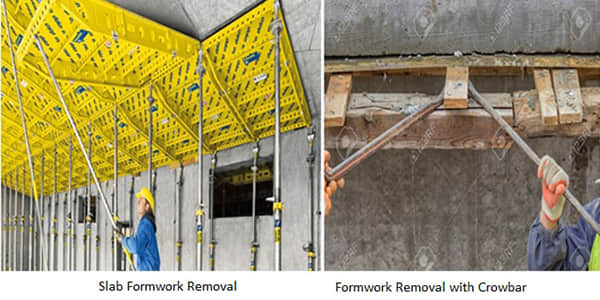
Formwork stripping must be based on concrete strength reports. Stripping based on experience or feeling is strictly prohibited.
5.1 Stripping Strength Requirements
Formwork stripping must be based on concrete strength reports. Stripping based on experience or feeling is strictly prohibited.
Side formwork: Can be removed when concrete strength ensures that surfaces and edges are not damaged by formwork removal, generally reaching more than 25% of design strength.
Bottom formwork: Must reach a certain percentage of design strength before removal:
- Slabs: 50% for span ≤2m, 75% for 2m<span≤8m, 100% for span>8m
- Beams, arches, shells: 75% for span ≤8m, 100% for span>8m
- Cantilever components: 100% design strength regardless of span size
Before stripping, strength reports from same-condition curing test blocks must be available, and implementation requires approval from the project technical director.
5.2 Stripping Sequence and Methods
Formwork stripping should follow the principle of "first erected last stripped, last erected first stripped". Remove non-load-bearing formwork first, then load-bearing formwork; remove side formwork first, then bottom formwork. Stripping sequence should proceed from top to bottom. Simultaneous work at upper and lower levels is strictly prohibited.
Special tools should be used for removal. Hard prying and hard smashing are strictly prohibited to prevent damage to concrete surfaces and edges. Operators should stand in safe areas and wait until the entire section of formwork is loose before removal. Removed formwork should be promptly cleaned, repaired, and stacked in categories for convenient reuse.
There are strict restrictions on support removal for multi-floor slabs: when the upper floor is pouring concrete, the formwork supports of the lower floor must not be removed; some supports can be removed from the floor below that. The specific number to be retained should be determined based on structural calculation. Premature removal of supports for material turnover is strictly prohibited.
5.3 Stripping Safety Precautions
Warning signs should be set up in stripping areas, and non-workers are not allowed to enter. Removed formwork and supports should be promptly transported away, and shall not be stacked in large quantities on floors to avoid overloading floor slabs.
Operation platforms should be erected for high-place stripping. Standing on formwork to be removed is strictly prohibited. Removed formwork must not be thrown downward; it should be lowered with ropes or transported by vertical transportation equipment.
6. Conclusion
Formwork engineering is a key segment in concrete structure construction, involving multiple dimensions such as quality, safety, cost, and schedule. From plan development and material inspection before construction, to precise control during installation, and standardized operations during the stripping phase, every segment cannot be ignored.
As construction professionals, we should firmly establish the concept of "quality first, safety first", strictly construct according to specifications and plans, focus on detail control, and ensure every process meets standards. Only in this way can we create high-quality, safe construction excellence and promote high-quality development of the industry.
With the continuous advancement of construction technology, new materials and processes such as aluminum alloy formwork, plastic formwork, and disk-lock scaffolding are gradually being promoted. Formwork engineering is developing toward standardization, tooling, and greening. We should actively embrace new technologies and processes to continuously improve the construction level and economic benefits of formwork engineering.